This week’s global headlines reveal a world navigating simultaneous breakthroughs and crises. While humanity achieves historic milestones in space exploration, returning safely from the far side of the moon, terrestrial challenges intensify. From the sinking foundations of Mexico City to the environmental toll of conflict in the Middle East, and from the underwater race for rare earth minerals in the Pacific to the looming water scarcity in the United States, the data points toward a planet under pressure.
Below is an analysis of the most significant developments, connecting scientific discovery, geopolitical strategy, and environmental urgency.
🚀 The Artemis Era: Safe Return and Historic Views
The Artemis II mission has concluded its primary objective, marking a pivotal moment in modern space history. The four astronauts have safely returned to Earth after traveling farther from our planet than any humans before them. This safe return is critical; as historical precedents show, failures during the high-speed reentry phase—where spacecraft hit the atmosphere at 32 times the speed of sound —have previously grounded entire space programs.
During their journey, the crew provided unprecedented visual data:
* Far Side Imagery: The mission delivered the first close-up images of the moon’s far side from just 7,000 km away, confirming NASA’s operational readiness for future lunar landings.
* Meteorite Impacts: While en route, the astronauts witnessed six meteorite collisions with the lunar surface. These events highlight the constant bombardment of space debris, where impacts are powerful enough to generate flashes visible from thousands of kilometers away.
Why this matters: The success of Artemis II de-risks the path toward sustainable lunar presence. The data collected on reentry dynamics and lunar surface conditions is not just scientific curiosity; it is the engineering blueprint for the Artemis III landing and eventual Mars missions.
🌍 Geopolitics and Resources: The Underwater Race for Independence
In a strategic move to reduce dependency on China, Japan has identified a massive deposit of rare earth elements 6,000 meters beneath the Pacific Ocean. Located off a remote island, this discovery positions Tokyo to potentially break Beijing’s near-monopoly on these crucial minerals, which are essential for electronics and green energy technologies.
This development underscores a broader trend: resource security is becoming a primary driver of foreign policy. As nations seek supply chain resilience, deep-sea mining and alternative sourcing are moving from theoretical concepts to urgent economic imperatives.
🌊 Environmental Crisis: War, Water, and Wildlife
The environmental impact of human conflict and climate change is accelerating across multiple fronts.
The Hidden Cost of Conflict
The ongoing tensions in the Middle East are reshaping ecosystems in ways often overlooked in headline news:
* Strait of Hormuz: Marine life in this critical chokepoint faces continuous stress from naval mines, military sonar, and heavy shipping congestion. There is no “ceasefire” for the ocean beneath the surface.
* War’s Ecological Footprint: From the Iran region to broader conflict zones, war leaves a toxic legacy. Rising emissions, oil spills, poisoned soil, and damaged ecosystems suggest that environmental degradation will persist long after active fighting ceases.
Water Scarcity in the US
Summer in the United States is approaching with a stark warning: the American water crisis is becoming immediate.
* Colorado River & Beyond: Drought-stricken regions, including the Colorado River basin and cities like Corpus Christi, are facing critical shortages.
* Infrastructure Strain: These are not distant future projections but current operational realities. The convergence of prolonged drought, aging infrastructure, and rising demand threatens to boil over into severe supply disruptions.
Urban Subsidence
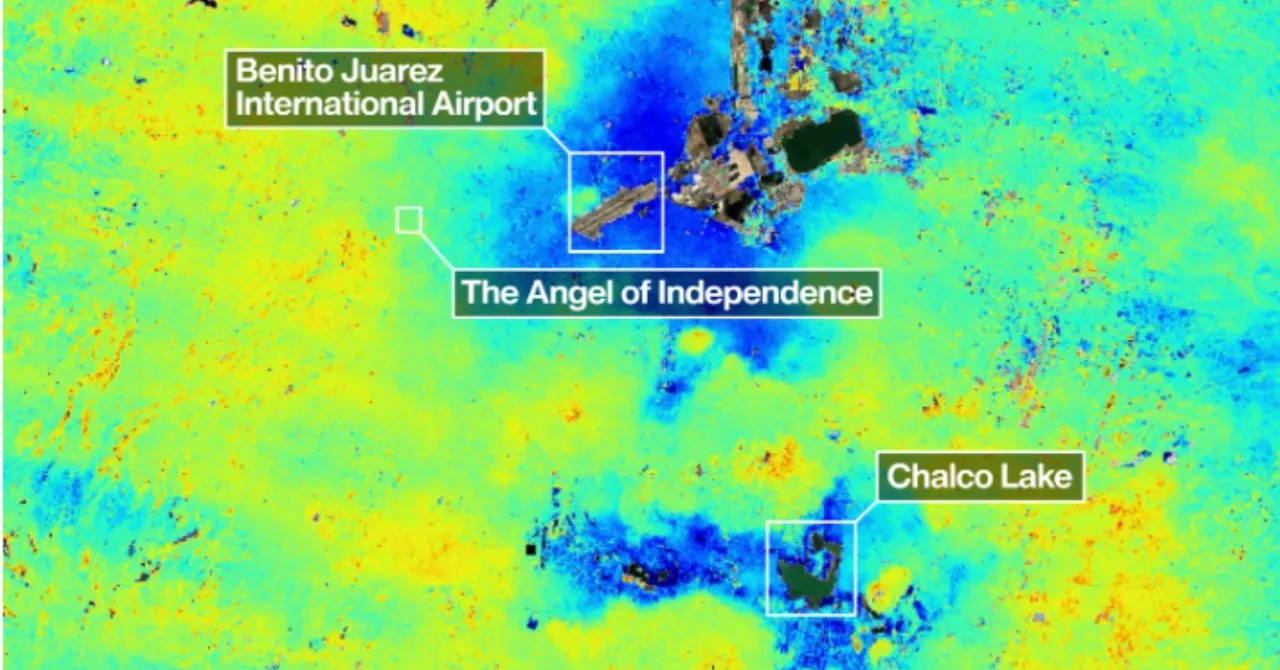
Meanwhile, Mexico City continues to sink at an alarming rate. New data from NASA satellites has quantified the speed of this subsidence, revealing the geological vulnerability of one of the world’s largest metropolises. This is not merely a local issue but a case study in how urban expansion on fragile aquifers leads to irreversible geological change.
🔬 Scientific Insights: From Mosquitoes to Salmon
Advances in behavioral science are offering practical solutions to public health and ecological monitoring:
- Mosquito Targeting: Scientists have mapped the flight paths of mosquitoes to quantify exactly what draws them to humans. This data is being used to design more effective, life-saving traps, moving beyond broad-spectrum repellents to targeted interception.
- Cocaine in Salmon: In a striking demonstration of environmental pollution’s reach, researchers exposed wild salmon to cocaine and its metabolites. The fish exhibited abnormal behaviors similar to those observed in lab settings. This confirms that illicit drug runoff is altering the behavior of wildlife in open waterways, raising questions about the broader ecological impacts of pharmaceutical and illegal drug pollution.
🛰️ The New Space Economy
Beyond government missions, a commercial revolution is underway. A new generation of **satellite startups in