John Scola just got banned.
Again. Or rather, he was never invited in the first place. Not anymore, at least.
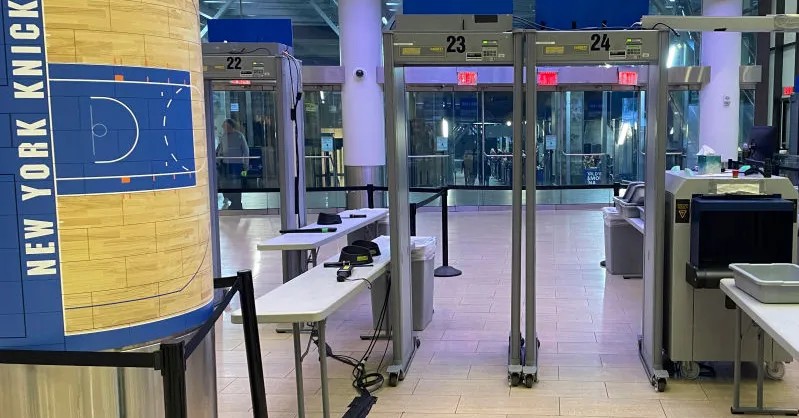
The trigger was predictable, almost quaintly so. Scola sued the Madison Square Garden on behalf of a client—a New York police officer injured during a shift inside the building. For James Dolan, the man who runs the Garden with an iron fist and a sophisticated facial recognition system, this isn’t a legal dispute. It’s an invitation to revoke access.
For years, the strategy has been transparent in its cruelty. Dispute one lawyer? Ban the whole firm. Dispute a single client? Lock them out of every venue Dolan controls.
Any tickets to MSG Venues, the letter to Scola stated plainly, are hereby revoked.
The note arrived on April 30. It’s proof that the blacklist is still growing, fed by biometric surveillance that operates outside the usual rules of the city it occupies.
There is a weird tension here. New York’s police protect the city. The Garden pays those same police officers to act as unpaid—wait, paid detail—extra security. It’s a loop that keeps tightening until something breaks. Last month, WIRED reported that the Garden’s security apparatus was effectively running its own unsanctioned surveillance network in midtown Manhattan. The NYPD hadn’t authorized it. The data wasn’t shared. But the photos? Those were in the system.
Mayor Zohran Mamdani called the expansion of private surveillance “deeply troubling.” Attorney General Letitia James warned that New Yorkers deserve rights violations less at concerts.
And yet.
In February 2025, the Garden hired two NYPD officers to manage crowd control for a lightweight boxing match at the Hulu Theater. Eight were deemed necessary. Two showed up. One of them was John Przybyszewski, a seven-year veteran with deep ties to the Staten Island precinct. He was there because he needed the extra cash. Because it was his job.
What happened next sounds like a riot masquerading as entertainment.
Lil Tjay, a rapper whose entourage has a habit of escalating situations, apparently spat in the face of a security guard who tried to block his path to the ring. Chaos followed. Videos show a melee near ringside. Przybyszewski ended up on the floor, pinned under a pile of people. He came out with severe cervical and lumbar spine injuries. Some are permanent.
He blames Lil Tjay. He blames the Garden for understaffing the event, leaving him exposed and alone when the crowd turned volatile. So Scola filed suit in February this year. He argued that operational negligence caused his client’s suffering. It’s a straightforward argument. It shouldn’t require bravery. But here we are.
Did the Garden respond to WIRED ’s request for comment? No. Lil Tjay’s team stayed silent too.
Five weeks after the lawsuit landed, the Garden threw a “Thank You, NYPD!” concert. Cyndi Lauper headlined. John Fogerty played. Fat Joe and Tracy Morgan, staples of the Knicks courtside scene, performed to appreciative crowds. The irony isn’t subtle. It’s structural.
Przybyszewski just wants his old job back. He likes some of the guys he works with. He misses the steady income from the detail work. Even if that work takes place inside a building that has officially declared his lawyer persona non grata.
Scola isn’t crying over lost tickets. He’s from Philly, not Queens. He wasn’t going to see the Knicks play anyway, even in the Eastern Conference Finals. The ban feels petty to him. Petty is the word. But it doesn’t change the calculation. He is here to represent his client. If representing a cop means being barred from the most famous arena in New York until they settle or lose, then fine.
That is the cost. Or at least, one version of it.
The question is whether the Garden knows it. Or if the biometric scanners just see a face, match the ID, and click the lock without thinking. It is hard to say where the law ends and the leverage begins. Or maybe that line doesn’t exist at all, just a shadow cast by a very powerful light. 🥊🚫