
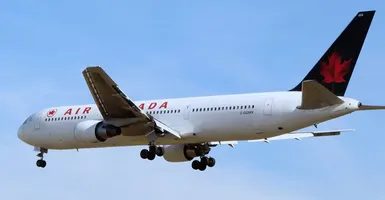
Most people think of Air Canada as a modern, privatized giant, but the airline was actually born from a specific piece of Canadian legislation. The Trans-Canada Air Lines Act, passed by Parliament on April 10, 1937, established the carrier. For nearly three decades, it flew under that name before officially adopting the Air Canada brand on January 1, 1965. The headquarters remain in Montreal today, anchoring a network that has evolved from a single regional route to a sprawling international web.
From Vancouver to Seattle: The Humble Beginnings
The first scheduled flight wasn’t transcontinental. It connected Vancouver, British Columbia, to Seattle, Washington. That single corridor was the seed. Over the next decades, the airline expanded aggressively, adding its own routes and connecting partners. By the early 21st century, the network reached more than 90 communities across Canada and the United States. The reach extended further into Bermuda, the Caribbean, the United Kingdom, continental Europe, Asia, Australia, and South America.
One notable milestone came in 1966 when Air Canada became the first North American airline to serve Moscow.
Why the Monopoly Ended
As a crown corporation, Air Canada held a monopoly on Canadian domestic air transport from 1937 to 1959. That era didn’t last. During the 1960s and 1970s, the government gradually lifted restrictions. Competitors entered the market, challenging Air Canada on both domestic and international routes. The regulatory landscape shifted, forcing the airline to adapt to a competitive environment it had previously avoided.
The 1988 Privatization and Fleet Upgrades
How did a state-owned monopoly survive the shift to competition? Privatization was the answer. In 1988, the company sold 45 percent of its shares to employees and the general public. This partial privatization served three purposes: it further deregulated operations, raised capital to upgrade the fleet, and positioned the company to compete more effectively. The remaining shares were sold the following year, making Air Canada fully private in 1989.
The 2000 Merger That Changed Everything
Which move transformed Air Canada into a global heavyweight? The acquisition of Canadian Airlines International in 2000. At the time, Canadian Airlines was the second-largest carrier in Canada. By absorbing its rival, Air Canada consolidated its position and emerged as one of the world’s largest commercial airlines. The merger wasn’t just about size; it was about securing a dominant position in a now-fully competitive market.
The journey from a single Vancouver-Seattle route to a global network illustrates how regulatory changes, strategic acquisitions, and capital shifts can reshape an industry. The crown corporation era is long gone, but the infrastructure built during those early decades still underpins the airline’s global reach.