
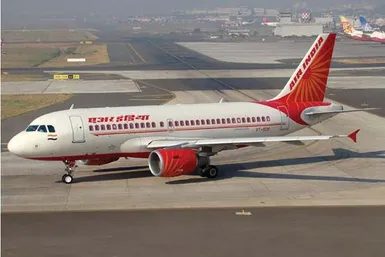
Air India is more than just a flag carrier. It is a historical artifact of Indian economic policy that finally found a buyer after decades of state failure. The airline operates globally, with headquarters in Mumbai and a network spanning southern and eastern Asia, the Middle East, Europe, Africa, Australia, the United States, and Canada. It started as Tata Airlines in 1932. J.R.D. Tata flew mail and passengers between Karachi, Ahmadabad, Bombay, Bellary, and Madras. By 1939, the routes reached Trivandrum, Delhi, Colombo, and Lahore.
The structure of the company shifted dramatically over time. In 1946, Tata Airlines became a public company named Air-India Limited. Two years later, a subsidiary formed to handle international flights to Cairo, Geneva, and London. The government nationalized all Indian airlines in 1953. This created two entities. One for domestic service, Indian Airlines Corporation. The other for international service, Air-India International Corporation. The latter shortened its name to Air India in 1962.
For decades, the airline expanded cargo operations and routes to every continent except South America. In 2005, it dropped the hyphen. The move aimed to gain an edge in computerized reservation searches. The name became Air India. The strategy was simple. Be visible in digital booking engines.
The Privatization Timeline and Tata Buyout
Competition changed the landscape after 1994. Private airlines entered the Indian market. Air India struggled to keep pace. Market share eroded quickly. The corporation maintained an oversized fleet. It kept a bloated labor force. Efficiency took a backseat to political considerations. The airline posted losses starting in 2007.
That same year, it merged with Indian Airlines to form the National Aviation Company of India Ltd. The entity renamed itself Air India Ltd. in 2010. Debt accumulated over the next ten years. The burden reached billions of dollars. The government recognized the financial hole. It initiated privatization efforts in 2017.
Success was elusive for years. Private investors hesitated at the valuation and legacy liabilities. The turnaround finally happened in 2021. The Tata Group acquired the airline. The return of the original founders closed a historical circle. This move signaled a shift in how India manages its strategic assets.
Financial Health and Operational Trade-offs
The privatization process revealed deep structural issues. The debt load was significant. Investors had to weigh the brand value against the operational drag. The fleet size was mismatched for the demand profile. Maintenance costs for aging aircraft weighed on margins. Labor agreements added rigidities to cost structures.
The Tata Group’s acquisition was not just a financial transaction. It was a restoration of trust. The brand had lost ground to low-cost carriers and international rivals. The new ownership aimed to modernize operations. They targeted route optimization. The focus shifted to profitability over mere presence.
Competition in the region remains fierce. Carriers from the Middle East and Southeast Asia offer aggressive pricing. Air India must justify its premium positioning. The global network provides an advantage. Direct flights to the US and Europe are rare for competitors. This connectivity is a moat. It attracts business travelers who value time over price.
Long-Term Implications for Global Aviation
The sale marks a pivot in Asian aviation dynamics. State-owned carriers are being reassessed globally. Efficiency metrics