
The channel you know today as MS NOW has a complicated past. It launched in 1996 as MSNBC. NBCUniversal owned it until 2025. Now it stands for My Source News Opinion World. The shift to MS NOW in November 2025 marked a clean break from NBC. The network leans left. It always did, once the tech giant left the chat.
Microsoft started this whole thing. They partnered with NBC. The goal was simple. Create a news outlet that combined the best of both worlds. A companion website launched alongside the TV channel. Early programming tried to be balanced. You had news. You had opinion shows from both sides of the aisle. It was an experiment in digital-age journalism.
It didn’t work. Not at first. Viewership lagged. CNN was bigger. Fox News was louder. MSNBC struggled to find its footing in a crowded market. They tried changes. They tweaked schedules. They added hosts. Nothing really stuck. The numbers stayed flat. The identity remained murky.
Then Microsoft pulled out. The exit started in 2005. Microsoft ended its involvement with the TV channel. By 2012, they were gone from the website too. That site became NBCNews.com. The tech giant walked away. NBC kept the TV portion. They had to decide what MSNBC actually was.
The answer arrived through anger.
Countdown with Keith Olbermann changed everything. The show ran from 2003 to 2011. It mixed hard news with sharp political commentary. Olbermann didn’t just report on politics. He attacked it. He targeted Fox News. He targeted Bill O’Reilly. He targeted the Republican Party. His critiques were frequent. They were scathing. People listened.
Chris Matthews helped too. Hardball aired from 1999 to 2020. It offered a different kind of criticism. Matthews focused on the George W. Bush administration. He questioned decisions. He challenged narratives. The show built a loyal audience. Viewers who felt ignored by traditional news found a home here.
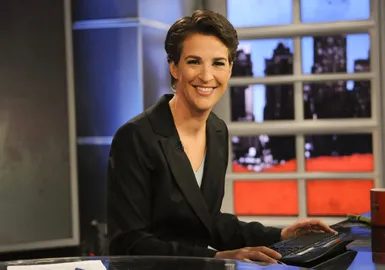
The strategy became clear. Lean into the left. Add hosts who fit that mold. Rachel Maddow was the key. Her show debuted in 2008. It wasn’t an instant hit. It grew. It became the premier program. People tuned in for her analysis. They stayed for her perspective.
Some critics complained. They said the channel was too aligned with the Democratic Party. MSNBC didn’t care. They embraced the progressive label. In 2010, they adopted the tagline “Lean Forward.” It wasn’t a subtle hint. It was a declaration. The channel was no longer trying to appeal to everyone. It was appealing to its base.
The transition wasn’t smooth. It was a pivot. A hard one. Microsoft had wanted a neutral partner. NBC wanted ratings. The audience wanted validation. MSNBC gave them that. The result was a network that defined a segment of American political discourse.
Now it is MS NOW. The name is shorter. The history is longer. The mission remains the same. Provide news and opinion for a specific audience. The left-leaning stance isn’t a mistake. It’s a feature. The channel survived the tech exit. It survived
The numbers don’t lie. MSNBC’s trajectory has been a rollercoaster of ratings highs and lows, driven less by programming strategy and more by the political weather outside.
In 2014–2015, the network hit a wall. Daytime viewership tanked. The solution? Pivot hard to straight news during the day. Keep the opinion-heavy commentary for the evening slots. It was a survival tactic.
Then came Donald Trump.
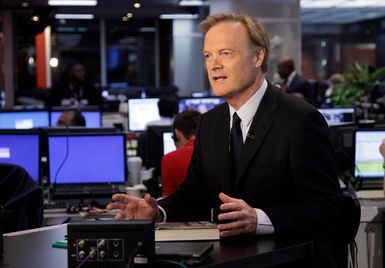
His presidency (2017–2021) became the channel’s golden era. Ratings spiked. The audience found a home in the partisan coverage. Hosts like Nicolle Wallace, Jen Psaki, Chris Hayes, Lawrence O’Donnell, Joe Scarborough, and Joy Reid became household names. They weren’t just anchors. They were the face of a media ecosystem built on reaction and analysis.
But early 2025 tells a different story.
The channel is struggling. Ratings are low. The reason? Liberal viewers are exhausted. After a second Trump presidency, many simply stopped watching news altogether. News avoidance isn’t a glitch. It’s a demographic shift.
Inside the network, the mood is tense. Turmoil is the operative word.
Breaking the Ties
The end of an era is here. The long-standing affiliation between MSNBC and NBC News is being severed. It’s not just a slight adjustment. It’s a structural breakup.
MSNBC, along with CNBC, Golf Channel, and USA Networks, is being spun off into a new, independent company. This isn’t a merger. It’s a divestiture. The corporate ties that bound cable news to network news are dissolving.
Why does this matter to you? Because it changes how these shows are funded. How they’re produced. And who answers to whom.
Personnel Shakeups
The lineup is being rewritten in real-time. Joy Reid’s tenure is ending. The network is cutting ties. At the same time, Jen Psaki is being elevated. She’s now a prime-time host, four nights a week.
It’s a gamble. Psaki brings a different energy. Less partisan shouting. More former insider analysis. Will it hold the audience that fled in 2024? Will it attract new ones? Nobody knows.
Rebecca Kutler, president of MS NOW, issued a staff memo. She claimed the network remains committed to “breaking news and best-in-class opinion journalism.”
“MS NOW is meant to reflect the network’s continuing commitment to breaking news and best-in-class opinion journalism,” Kutler wrote.
Translation: We need a new brand. We need to survive the spin-off. And we need to convince advertisers that the liberal audience is still worth targeting, even if they’ve tuned out.
The Trade-Off
Here’s the reality no one is shouting from the rooftops.
Cable news is a business. It requires eyeballs. When viewers stop watching because they’re tired of the political circus, ad revenue dries up. When the corporate parent splits the network off, the pressure to prove value intensifies.
The shift to a new independent company might offer creative freedom. It might also strip away the safety net of NBC’s resources.
Psaki’s expansion