
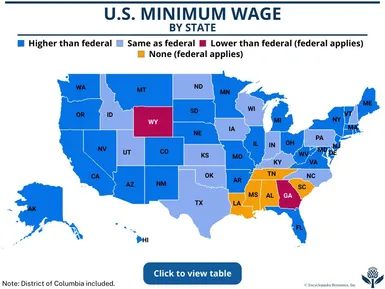
Minimum wage laws do more than just set a floor for hourly pay. They ripple through earnings, business operating costs, and broader economic policy. These rules define the lowest amount employers can legally pay. The structure varies. You might see rates set by the hour, week, or month. Some jurisdictions allow tips to count toward that mandatory baseline. Others do not.
The History of Wage Floors
The modern concept of a wage floor emerged in the 1890s. Australia and New Zealand led the way. They paired minimum wages with compulsory arbitration for labor disputes. Great Britain followed in 1909. Trade boards were established to set rates in specific industries.
The United States took a different path. Massachusetts enacted the first state law in 1912. It covered only women and children. National statutes didn’t arrive until 1938. The original intent was clear. Shorten work hours. Raise pay in covered sectors.
Today, minimum-wage legislation exists in more than 90 percent of countries. The implementation is messy. In the European Union, most members have national minimum wages. Others rely on collective bargaining between unions and employer groups. Argentina uses a different model. The National Council for Employment, Productivity and the Minimum Wage (SMVM) sets rates. This council has equal representatives from government, employers, and workers.
Developing countries often set rates higher than developed nations and the EU. That trend isn’t universal. The Commonwealth of Independent States and southeastern Europe deviate from it.
Economic Trade-offs and Controversies
Supporters argue these laws improve work ethic. They raise the standard of living. They reduce reliance on social welfare programs. They also protect workers from employer exploitation.
Opponents see a different picture. Small businesses struggle to absorb higher payroll costs. Unemployment may rise as employers cut hiring. Education can suffer if students leave school for work. Businesses might outsource jobs or raise prices to cover inflation from rising operating costs.
This debate isn’t static. It evolves with political pressure and economic conditions. People constantly ask whether the U.S. federal minimum wage should increase. Some propose alternatives like a universal basic income. Others point to the Earned Income Tax Credit (EITC). EITC programs help low-wage earners through tax refunds. Basic income provides a periodic lump sum.
Which approach works best? The answer depends on who you ask and what data you prioritize.
How Minimum Wage Rates Are Structured
Understanding how these laws work requires looking at scope and coverage. Rates aren’t one-size-fits-all. They vary by region. They vary by industry. They vary by worker type.
In the U.S., most states have their own legislation alongside the federal floor. This creates a complex patchwork. Workers in one state might earn significantly more than those in a neighboring state doing similar work.
Global comparisons show stark differences. Some countries set rates based on average earnings. Others use collective agreements. The mechanism matters. It determines who benefits and who bears the cost.
The Impact on Small Businesses
Small businesses face unique challenges. They can’t absorb sudden payroll increases like larger corporations. Higher wages might mean fewer hours. It might mean reduced hiring. It might mean closing entirely.
This is where the debate gets heated. Supporters say small businesses adapt. They raise prices. They improve efficiency. Opponents say many simply shut down. The truth likely lies somewhere in between.
The risk is real. But so is the potential for stability. Workers with reliable income spend more. Local economies grow. Small businesses might benefit from a more robust customer base.
Alternatives to Direct Wage Mandates
If minimum wages create friction, what else exists? The Earned Income Tax Credit is a key alternative. It rewards work through tax breaks. It targets low-wage earners directly. It doesn’t force employers to raise prices.
Basic income is another option. It provides unconditional support. Every citizen gets a lump sum. It simplifies the welfare system. It removes the stigma of means-testing.
These alternatives avoid some of the pitfalls of direct wage mandates. But they have their own costs. Tax revenue must increase. Administrative systems must adapt.
Where to Find Specific Minimum Wage Data
If you need current rates, check local government websites. State labor departments maintain up-to-date databases. International comparisons are harder to find. They require digging into reports from organizations like the OECD or national statistics offices.
The data changes. Rates are adjusted. Coverage expands or contracts. Staying informed means checking multiple sources.
Why the Debate Continues
The minimum wage isn’t just about money. It’s about power dynamics. It’s about who controls the labor market. It’s about the balance between profit and survival.
Supporters see justice. Opponents see market distortion. Both sides have valid points. The reality is complex. It involves trade-offs. It involves unintended consequences.
Is there a perfect solution? Probably not. But there are better questions. How do we protect workers without crushing small businesses? How do we ensure fair pay without triggering inflation? How do we measure success?
These questions don’t have easy answers. They require ongoing scrutiny. They require data. They require nuance.
The debate will continue. Rates will rise. They will fall. Policies will shift. The core issue remains the