

Security in business economics is written evidence of ownership. It gives you the right to receive property you do not currently hold. Most people know stocks and bonds. These are the most common types. There are many specialized kinds designed for specific needs. This guide focuses on buying and selling securities issued by private corporations. Government securities get their own chapter.
Types of Corporate Securities
Corporations create two main kinds of securities. Bonds represent debt. Stocks represent ownership or equity interest in operations. The terminology changes across borders. In Great Britain, stock usually refers to a loan. The equity segment is called a share.
Bonds
A bond is a debt instrument. It is a promise. The corporation promises to pay a fixed sum at a specified maturity date. Interest is paid at regular intervals until then. Bonds may be registered in the names of designated parties. They can be made payable to the bearer. This facilitates handling. Bondholders usually receive interest by redeeming attached coupons.
It is difficult for a corporation to pay all bonds at once. Common practice involves gradual payment. Serial maturity dates help. A sinking fund arrangement also works. A specified portion of earnings is set aside regularly. These funds apply to the retirement of bonds.
Bonds can be called. The company has the option. This lets corporations take advantage of declining interest rates. They sell new bonds at more favorable terms. The funds eliminate older outstanding issues. Investors need protection. Bonds may be noncallable for a period. Five or ten years is common. The redemption price may equal the face amount plus a premium. This premium declines as the bond approaches maturity.
The mortgage bond is the principal type. It represents a claim on specified real property. This protection usually results in priority treatment. Financial difficulties leading to reorganization favor the holders. Another type is the collateral trust bond. The security consists of intangible property. Stocks and bonds owned by the corporation serve as collateral. Railroads and transportation companies use equipment obligations. They finance the purchase of rolling stock. The rolling stock itself is the security.
Terminology varies globally. In the United States, debentures refers to relatively long-term unsecured obligations. In other countries, it describes any type of corporate obligation. The term bond more often refers to loans issued by public authorities abroad.
Hybrid Corporate Securities
Corporations have developed hybrid obligations. They meet varying circumstances. The convertible bond is one of the most important. It can be exchanged for common shares at specified prices. These prices may gradually rise over time. This bond acts as a financing device. It obtains funds at a low interest rate during initial project stages. Income is likely low then. It encourages conversion of debt to stock as earnings rise.
Convertible bonds appeal during market uncertainty. Investors get price protection from the bond segment. They do not sacrifice possible gains from the stock feature. If the bond price falls below its common-stock equivalent, arbitrageurs act. They buy the undervalued bond. They sell the overvalued stock. They effect delivery on the stock by borrowing shares. This is selling short. They eventually convert the bonds to obtain shares. They return the shares to the lender.
The income bond is another hybrid type. It has a fixed maturity. Interest is paid only if it is earned. These bonds developed in the United States. They emerged from railroad reorganizations. Investors holding defaulted bonds accepted an income obligation. They exchanged their securities for the new form. The issuer was less vulnerable to bankruptcy risk. Interest on new income bonds was contingent on earnings.
The linked bond is still another form. The value of the principal is linked to a standard of value. Sometimes interest is linked too. Standards include commodity prices. Cost of living indexes work. Foreign currency combinations apply. The principle of linkage is old. Bonds of this sort received major impetus after World Wars I and II. Recent years show the most use in countries with strong inflationary pressures. Fixed-income obligations deter investors there.
The Real Value of Ownership
When you put risk capital into a company, you get stock. This is your slice of the pie. It represents ownership. But what you actually own depends on the corporate charter, the bylaws, and the laws of the state or country where the corporation is registered.
Typically, stockholders get to share in dividends. You get voting rights for directors and major corporate shifts. You can inspect the books. Less often, you get a “pre-emptive right” to buy new stock before others. Your interest is split into units called shares.
For a long time, the stock certificate was just proof of ownership. Now, it’s a transfer instrument. In some European countries, bearer certificates are common. They can be negotiated without endorsement. To avoid losing them, people often stash certificates in banks. These institutions handle transfers through offsetting transactions and bookkeeping.
In the United States, the stock certificate is usually registered in the owner’s name. Or it’s held in a “street name.” This means the broker or bank holds it. The bank might use a nominee’s name for legal reasons. This makes delivery easier. It facilitates the transfer process. Some investors still prefer to keep certificates in their own names. For legal or personal reasons.
Preferred vs. Common Equity
Corporations can assign different rights to different classes of stock. Preferred stock comes first. It has priority for dividends. If the company dissolves, it has priority for asset division.
Dividends on preferred stock are usually fixed. They often accumulate. If the corporation skips a payment, the deficiency must be cleared. Common shares get paid only after this backlog is resolved. Participating preferred stock gets more. It shares in whatever earnings go to common stock. This is often a lure when a corporation is financially weak.
Preferred stock has no maturity date. It may have redemption terms similar to bonds. Some include a conversion privilege. Others use a sinking fund. Voting rights vary. Preferred stockholders might vote on all propositions. More often, they vote only under specific conditions. Like if dividends are in default.
Common stock represents residual interest. In some countries, these are called ordinary shares. Distributions to bonds or preferred stock are fixed. Common dividends are set by directors at the time of payment. They vary with earnings. The market price swings widely. It depends on investor expectations of future earnings.
Options and Warrants
An option contract allows the holder to buy a security at a fixed price. The window is limited. One form is the stock purchase warrant. It lets the owner buy common shares at a designated price. The ratio is prescribed.
Warrants enhance the salability of senior securities. They are sometimes part of compensation for bankers marketing new issues.
Employee stock options are another form. They compensate key executives. They are subject to restrictions. They are generally non-transferrable.
Stock rights differ from warrants. They are transferrable. They allow stockholders to buy another security or a portion at a specified price. The subscription is proportional to current holdings. Stock rights have a shorter lifespan than warrants. The subscription price is below the market price of the common stock.
New securities don’t sell themselves. The marketing of these issues is the mechanical link that moves capital from people who have spare cash to entities that need it. Savers might park their money in savings banks or insurance trusts. The ultimate borrowers? Corporations. Municipalities. National governments.
Public debt has exploded globally. Governments are now heavyweights in new security markets. They can’t just issue debt blindly. They have to watch how their borrowing affects the rest of the market. Treasuries analyze interest rates. They study yield patterns. They track who holds what. If they mess this up, non-governmental borrowers suffer higher costs.
Local governments face stricter rules. Statutory restrictions govern their new issues. Usually, investment bankers buy these bonds and reoffer them to the public. The price goes up. The yield goes down. Sometimes terms are negotiated.
In the US, however, competitive bidding is king. The issuer announces a bond offering. It specifies the amount. Maturity dates. Purpose. Investment banker syndicates bid on the deal. The winner offers the best terms to the government. Then that syndicate resells to the public. Prices are calibrated to beat comparable market obligations. Profit margins are kept tight but present.
Private companies have options. A financial manager needing cash can go straight to commercial banks. Loans. Revolving credit. It’s essentially a formal line of credit. Simple.
Or they can sell securities. A private placement with an institutional investor like an insurance company avoids the messy public distribution process. It sidesteps the risk of unsettled market conditions. But there’s a trade-off. No public offering means no favorable publicity. It also doesn’t raise enough capital for massive firms with constant funding needs. Legal requirements are restrictive.
Public floatation is the alternative. Companies usually hire an investment banker.
The banker can buy the securities outright. Then sell them to the public at a markup. The banker takes the market risk. If the issue is huge, the originating bank pulls in other houses to share the purchase cost. They form a buying syndicate. Then a selling group is created to distribute the bonds to the public.
Alternatively, the banker acts as an agent. They take a commission on what sells. No risk taken on the inventory.
If the company negotiates the banker, it’s a relationship. The banker advises on timing. On terms. If it’s competitive bidding, the relationship is colder. More impersonal.
There is a golden rule in modern finance. Investors need to know the issuer. You can’t appraise quality in a vacuum. Many countries now mandate registration statements. Written prospectuses. Transparency isn’t optional.
Europe runs differently than the US. The aggressive investment-banking machinery seen in America is missing. Instead, European commercial banks dominate industry financing. In the US and UK, commercial banks play a smaller, more traditional role.
The 1960s changed everything. Industrial nations struggled to find local capital. Issuers began floating securities payable in 17 different European currencies. This was the birth of an international securities market.
They also tried issuing bonds in parallel across countries. Each portion denominated in the local currency. Legal and technical hurdles killed this idea. It didn’t catch on.
The US balance of payments problem accelerated the European market’s growth. US laws effectively shut the capital market to foreign issuers. Restraints were placed on foreign lending by US institutions. Direct foreign investment by US corporations faced headwinds.
Multinational US corporations had no choice. They needed to fund expanding foreign subsidiaries. They looked overseas.
US and foreign investment bankers formed syndicates to float these securities. The Eurodollar market facilitated this. Eurodollars are claims on dollars deposited in European banks. The bulk of new bonds offered abroad were denominated in Eurodollars.
Capital moved. The mechanism evolved. The landscape shifted away from domestic silos toward a more integrated, albeit complex, global web.
Why cross-border issuance matters
The shift wasn’t just about escaping US restrictions. It was about efficiency. When local markets tighten, capital flows where it’s welcomed. The Eurodollar market provided that channel.
For corporations, this meant access to deeper pools of liquidity. For investors, it meant diversification beyond national borders. The risk profile changed, too. Currency risk became a tangible factor. But so did the potential for higher yields.
The legacy of this era persists. Today’s global bond markets didn’t emerge from nowhere. They were forged by necessity. By regulatory arbitrage. By the simple fact that money seeks the best available return, regardless of geography.
Investors still face the same core challenge. Assessing credit quality in a world where data is abundant but interpretation is subjective. The tools have changed. The fundamental mechanics remain.
What this means for current market participants
Understanding the history of international securities helps explain current market behaviors. When you see a bond issued in London but denominated in US dollars, you’re seeing the tail end of that 1960s evolution. The Eurodollar market created a framework for cross-border capital that still underpins much of global finance.
For corporations, the ability to tap international markets remains a strategic advantage. But it requires navigating complex regulatory environments. Different jurisdictions have different disclosure rules. Different legal frameworks.
For individual investors, the lesson is clear. Diversification isn’t just about asset classes. It’s about geography. About currency. About understanding where the money is flowing and why.
The markets are less fragmented now than they were in the 1960s. But they are far from simple. The interplay between domestic policy and global capital flows continues to shape interest rates. And yields. And risk.
There is no perfect strategy. Only informed choices. And the more you understand the mechanics behind the new issues, the better positioned you are to make them.
The post-war era saw a specific shift in how nations accessed capital. Between 1957 and 1965, a new European market took shape. It wasn’t just a side effect of trade. It was a structural change in global finance.
Publicly issued foreign bonds jumped significantly. The volume started at roughly $492.6 million in 1957. By 1965, that figure had nearly tripled to $1.4895 billion. That is a massive expansion in a short eight-year window.
Who was borrowing all this money?
The list of principal borrowers was consistent and somewhat surprising to modern ears. Canada, Australia, Japan, Norway, Israel, Denmark, and New Zealand led the pack. These were not the industrial giants of today. They were developing or recovering economies with high capital needs.
The Role of Government vs. Private Sector
In almost every case listed above, the primary borrower was the national government. This wasn’t incidental. These states needed infrastructure, reconstruction funds, or debt refinancing. They turned to international markets because domestic capital wasn’t enough.
Canada stood out as the only exception in this group. There, political subdivisions—provinces and local governments—took the lead. They were the major borrowers, not the federal entity.
This distinction matters. It shows how local fiscal needs drove international debt issuance. It also highlights the early stages of municipal or provincial bonding in a global context.
Private Borrowers in Major Economies
The dynamic flipped in West Germany, Great Britain, and the United States. Here, private units were the only borrowers in international markets. Governments in these countries did not issue foreign bonds during this period.
Why?
These were established industrial powers. They had deep domestic capital markets. Their governments didn’t need to tap Europe for foreign loans. Private corporations, however, saw opportunities abroad. They issued bonds to fund expansion or operations across borders.
This split reveals a clear trend: emerging or recovering economies relied on state-led international borrowing. Mature economies saw private sector engagement in cross-border debt.
The Mechanics of Early Eurobonds
The rise of these markets wasn’t random. It was driven by regulatory arbitrage and capital flow needs. European banks, particularly in London, began underwriting bonds for non-residents. This created a liquid secondary market. Investors from multiple countries could buy these securities.
For borrowers, it offered access to a larger pool of capital. For investors, it provided diversification. But it also introduced new risks. Currency fluctuations, political instability, and differing legal frameworks all played a role.
The numbers tell a story of growth. $492.6 million to $1.4895 billion isn’t just a stat. It’s evidence of a financial system adapting to a new global order. The borrowers list—Canada, Australia, Japan, Norway, Israel, Denmark, New Zealand—shows where the demand was strongest. The absence of government borrowers in the US, UK, and West Germany shows where the supply came from.
This period laid the groundwork for today’s eurobond market. The mechanisms were simple compared to modern derivatives. But the intent was the same: move capital across borders efficiently. The borrowers knew the risks. The lenders took them. The market
How economic growth fuels modern trading
Markets didn’t appear by accident. They emerged because economies got bigger. In the early stages of development, businesses are small. They need small amounts of cash. Savings rates are low. There are no complex institutions to move private money into productive projects.
Then national income rises. New financial players enter the scene. Their job is simple: take the growing pile of savings and put it to work.
This creates a specific demand. Individual and institutional investors need a place to go. They need to convert stock holdings into cash quickly. They need speed. This pressure builds the development of securities trading as we know it today.
Why internal growth matters more than new issues
Here is a nuance often missed. As markets mature, corporations change how they raise money.
They rely less on selling new shares to the public. They rely more on reinvesting their own profits. This plowing back of earnings isn’t random. It responds to investor sentiment.
If a company looks promising, investors bid up its share price in the trading market. They are willing to skip dividends. They bet on long-term capital gains from internal growth.
When expansion is funded by retained earnings, the secondary trading segment becomes the dominant force in the capital market. It matters more than the primary new issue market.
Roots in commerce and credit
Stock exchanges have humble origins. They started with agricultural commodities.
In medieval Europe, traders at fairs used credit. This required paper trails: drafts, notes, bills of exchange. The French stock exchange traces back to the 12th century. Trading focused on commercial bills of exchange.
Philip the Fair (1268–1314) saw the chaos and created regulation. He established the courratier de change. This was the ancestor of the modern French broker, or agent de change.
Meanwhile, in Bruges, merchants gathered outside the Van der Buerse family home to trade. The family name stuck. “Bourse” became synonymous with a stock exchange.
This pattern repeated in the 16th and 17th centuries. Amsterdam. Great Britain. Denmark. Germany. Trading centers spawned institutional markets.
The shift from bills to stocks
Trade expansion demanded banks. It demanded insurance companies. Governments faced intermittent capital shortages and sought new funding sources.
The earliest security issuers were governments. Banks. Insurance firms. Joint-stock enterprises. Large trading companies.
Moving from commercial bills to securities was a logical step. It wasn’t a leap.
By the early 1600s, shares of the Dutch East India Company traded in Amsterdam. In 1773, London dealers moved out of coffeehouses into a dedicated building. By the 19th century, formal securities trading was standard in industrialized nations.
Regulation: Voluntary vs. Legal frameworks
The evolution continued with different regulatory philosophies.
In Great Britain, progress was internal. The London Stock Exchange regulated itself. It operated through voluntary rules.
France took a different path. French exchanges are subject to direct law. The agents de change operated under national decrees.
Paris once had three distinct markets:
* The Parquet: The official “floor” market.
* The Coulisse: A semi-official “wing” market.
* The Hors Côté: An unregulated “outside” market for unlisted securities.
Regulation tightened over time. The Hors Côté faced official oversight in 1929. Its activities merged into the Coulisse in the following decade. Then, in 1961, the Coulisse combined with the Parquet.
Belgium swung between control and freedom. Strict government control arrived in 1801. It ended in 1867. The economic crisis of 1929–1934 brought central authority back.
Switzerland took a decentralized approach. Exchanges are governed by cantonal (state) law, not a single national mandate.
Post-war shifts and global expansion
History reshaped these markets.
In South Africa and Canada, mining drove the creation of exchanges. Not trade. Mining.
Germany saw a geographic shift. The Berlin Stock Exchange lost dominance after World War II. Frankfurt and Düsseldorf took over.
Japan underwent a complete revolution. A new securities law, modeled on the US system, was enacted. There was a massive campaign to distribute stocks previously held by zaibatsu (family-owned combines) and semigovernment corporations.
Public ownership soared. This fueled considerable growth across nine Japanese exchanges.
Developing countries also looked westward. Governments began using stock exchanges to facilitate external financing. It wasn’t just about local capital anymore. It was about connecting to the global pool.
The machinery changed. The purpose remained the same. Move capital where it’s needed. Speed up transactions. Let shareholders exit when they choose.
We are still tweaking the mechanisms. The core tension between regulation and voluntary organization persists. Some markets prefer self-policing. Others demand state oversight. Both approaches have trade-offs.
The question isn’t which system is perfect. It’s how well the current structure serves the investors who put money in. And who gets left out when the market moves too fast.
The U.S. financial system didn’t start with a bang. It started with speculation. In 1791, Philadelphia hosted the first stock exchange. The city was the hub of domestic and foreign trade, making it the logical place for investors to gather.
Just one year later, New York followed.
Twenty-four merchants and brokers met under a tree at 68 Wall Street. They made a pragmatic decision. They would charge commissions for acting as agents. They would also give each other preferential treatment in negotiations. The trading volume was low. Government securities formed the core of the market. Bank and insurance stocks were added later. Roads and canals brought more securities to the table. By 1817, these brokers formalized their structure, creating the New York Stock and Exchange Board.
Industrialization fueled growth. The Civil War era saw additional exchanges emerge. One of these became the forerunner of NYSE Amex Equities, now one of the largest markets in the country. The NYSE adopted its current name in 1863.
Global Exchange Structures Differ Radically
Stock exchanges share core functions. They handle listing, trading, and clearing. The administrative machinery, however, varies wildly.
Consider the London Stock Exchange. It is the largest in the world by volume and variety of securities. It operates independently. Government regulation does not touch its daily operations. It resembles a private club. A council administers the rules. Members elect the council. The government broker serves as an ex officio nonvoting member. The secretary and staff handle daily operations.
The United States takes a different path. The government does not run the exchanges. But since 1933, Congress has passed laws that shape the market.
Two acts define the landscape. The Securities Act of 1933 covers the new-issue market. The Securities Exchange Act of 1934 governs trading. The 1934 Act requires every major exchange to register with the SEC. Exemptions exist only for exchanges with limited transaction volumes. These exchanges must follow specific trading rules.
This creates an administrative partnership. Exchanges are private associations. They function as quasi-public institutions. The SEC can intervene if public interest demands modification.
European exchanges face stricter governmental oversight. The Amsterdam Stock Exchange is a private organization. The Minister of Finance still exercises supervision under existing legislation.
The Zürich exchange relies on a board of elected members. They set policy. They coordinate committees. The Zürich Cantonal Committee directs floor trading. Its chair is the head of the Finance Department of the State of Zürich.
Frankfurt operates under a Board of Governors elected by members. But the rules require approval from the authorities of Hesse. The Minister of Finance in Hesse appoints official specialists. These specialists manage trading in specific securities.
Brussels involves the Ministry of Finance in appointing committee members. A governmental representative supervises rule compliance. The Banking Commission, nominated by the government, holds significant power over admitting securities to public trading.
In Paris, the policy-making Exchange Commission is led by the Governor of the Banque de France. Regular members are chosen by the Ministry of Finance. The agents de change who supervise trading are semigovernmental officials.
Italy takes a rigorous approach. New members on Italian stock exchanges must pass competitive examinations. The government appoints them from the resulting list. This process grants them a public status.
Regulation isn’t just about rules. It’s about structure. Who holds the pen? Who writes the constitution? The answers define the market’s character.

The Gatekeepers of the Floor
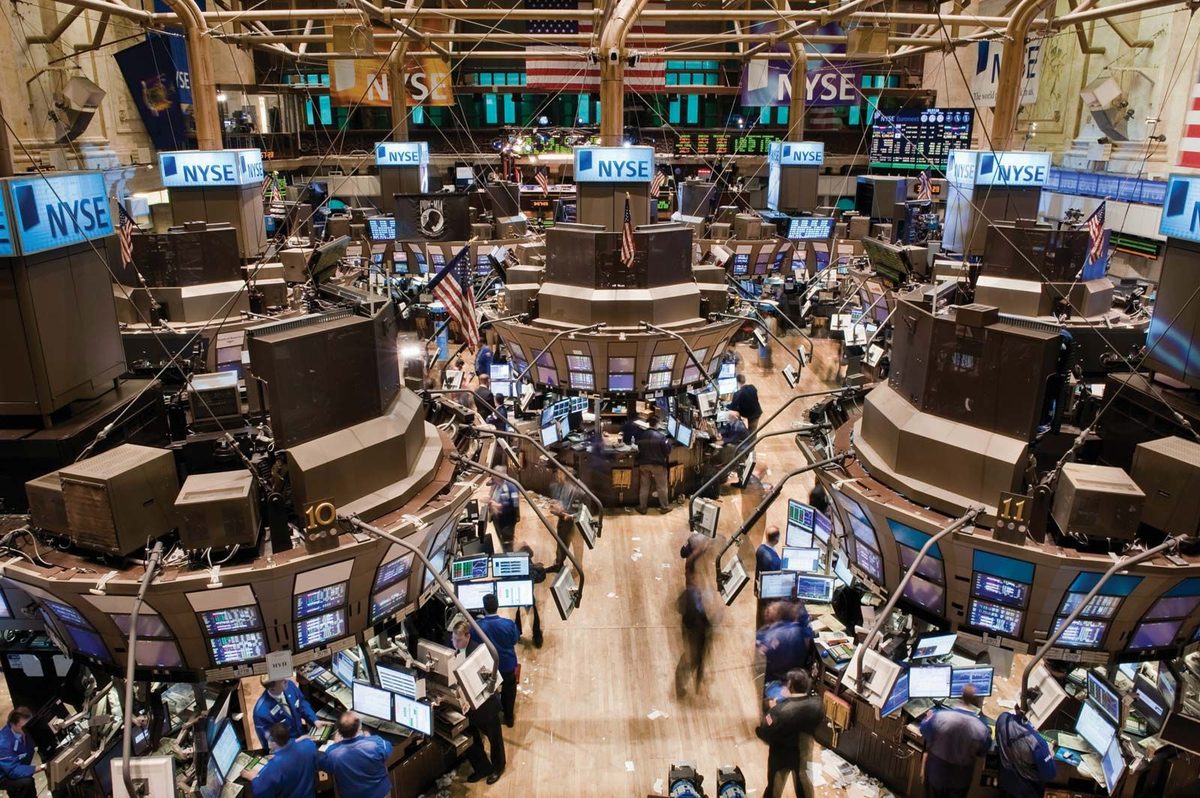
For over seventy years, the gates of the New York Stock Exchange have stayed firmly shut to anyone outside a very specific club. Since 1953, membership has been capped at 1,366 individuals. Not firms. Not corporations. People.
But here is the twist. These individuals are rarely solo operators. They are usually partners or stockholders of member firms—organizations that actually do business with the public. The exchange doesn’t just let anyone in. It watches them like a hawk. The rule? A majority of the owners must be primarily engaged in brokering or dealing in securities. If you want to own a stake in a member corporation and it hits 5 percent, you need the exchange’s nod. Active principal officers and directors? They have to be members or allied members themselves.
The exchange supervises member firms in what it considers to be the public interest.
This creates a hierarchy. You have the full members who trade on the floor. Then there are the allied members. They follow the rules. They pay the dues. But they don’t get to step onto the trading floor and shout out orders. They are part of the ecosystem, but not the engine.
Why Structure Matters for Retail Investors
Why does this ancient structure still matter to you, the person trying to make sense of their portfolio? Because the NYSE isn’t just a marketplace. It’s a regulated entity with skin in the game. When you buy a stock on the NYSE, you aren’t just clicking a button. You are relying on a system where the intermediaries have been vetted, capped, and held to strict operational standards for decades.
The cap on members isn’t arbitrary. It limits competition for status, perhaps, but it also ensures that the people running the show have a long-term stake in the integrity of the exchange. They aren’t transient. They are there for the long haul. This reduces the risk of chaotic, unregulated trading frenzies that might otherwise plague a purely open market.
The Cost of Exclusivity
There is a downside. Exclusivity breeds complacency. When only 1,366 people can be members, the barrier to entry is sky-high. This isn’t just about money; it’s about legacy and connections. For a long time, this kept the exchange insular. It kept out innovators who didn’t fit the traditional broker-dealer mold.
But the market has changed. Electronic trading has rendered the physical floor largely ceremonial for many transactions. The allied members, those who can’t trade on the floor, now play a different role. They handle market making. They provide liquidity. They bridge the gap between the old guard and the new digital reality.
The system is rigid. It is slow to change. But it is also stable. For an investor, stability has value. You might not love the exclusivity. You might hate the idea that access is restricted to a small group of individuals. But when the market shakes, you want to know that the houses on the other side of the trade are built on solid, regulated ground.
The question isn’t whether the cap is fair. It’s whether the protection it offers is worth the inefficiency. In volatile times, you might find yourself praying for that inefficiency.
How Exchange Membership Works
Getting into the inner circle of a major stock exchange isn’t just about showing up. It is a gated process. On the New York Stock Exchange, you don’t just pay a fee and start trading. You need a “seat.” And not just any seat. You have to buy one from a current member or inherit it from the estate of a deceased one.
But owning the seat is only step one.
The board of governors holds the real power here. They investigate. Deeply. They look at your past record. They scrutinize your financial standing. Then, you have to prove you actually know what you are doing. A rigorous examination on securities knowledge is mandatory. No shortcuts.
Not all members are created equal, either. The floor is crowded with different roles, each with a specific function.
Take the commission broker. These are the workhorses. They execute customer orders at or near the current market price. They are close to the public money. Then there are the specialists. They focus on one or more specific issues. They act as brokers for other members’ limited orders, but they also act as dealers. They buy and sell for their own account. That creates a conflict of interest that is heavily regulated.
You also have floor brokers. Some call them “two-dollar” brokers. They execute orders for other brokers. They take a commission. They do not talk to the public. They stay in the ring.
Odd-lot brokers handle the small change. They buy or sell in quantities that aren’t the standard 100-share lot. And then there are the registered traders. They buy and sell for their own account. No clients. Just risk and reward.
The rules change when you cross the Atlantic.
Why London Members Are Different
The London Stock Exchange doesn’t deal in physical seats. It deals in nominations. To join, you need a nomination from a retiring member. The price? It floats. It varies with demand and supply. It can be expensive.
But the money isn’t the only hurdle. You need approval. Specifically, at least three-quarters of the Stock Exchange Council must vote yes. That is a high bar.
Once you are in, you are either a broker or a jobber. A broker acts as an agent for the public. A jobber deals for his own account. But here is the catch: a jobber only trades with other brokers or jobbers. They do not touch the public directly. It is a closed loop of professionals.
The French Gatekeepers
Paris is even more exclusive. There are exactly 85 agents de change. That is the hard limit. No more. No less.
These agents supervise activity. They do not do the heavy lifting themselves. The actual trading and executing of orders are done by their employees and those of the exchange. It is a hierarchy.
To become one of these 85, you need a specific mix of credentials. Prescribed standards of education. Years of experience. A written examination that likely keeps you up at night. You must be nominated by a retiring member or the heirs of a deceased member. And you must make a deposit guaranty.
Then, the final step. Formal appointment by the Minister of Finance. Government approval. Not just industry approval.
Global Variations
Other European exchanges set their own bars. Character. Experience. Financial standing. Some add educational requirements on top of that.
In Brussels, the path is long. Six consecutive years in a broker’s office. Minimum. Plus a degree in commercial science or economics. Plus a professional examination. It is a marathon.
In Germany, Switzerland, and Sweden, the landscape is different. Banks dominate the brokerage business. It is not about individuals buying seats. It is about institutional power.
Japan operates on a completely different logic.
Members of Japanese exchanges must be corporations. Individuals cannot join. The business must be done in securities.
There are two kinds of members here. Regular members. They buy and sell for customers or for their own accounts. Full service. Full risk.
And there are saitori. They act principally as intermediaries for regular members. They bridge the gap. They facilitate the flow.
The structure of the trade defines the risk. The gatekeeping defines the stability. Who gets in matters. How they operate matters more.
How Stock Exchanges Actually Set Prices
Most trading venues operate as auction markets. Prices aren’t set by a central algorithm or a fixed price tag. They emerge from competitive bidding. In massive, liquid markets, this auction is continuous. It happens all day, every day, for any stock with active interest. Smaller markets work differently. They use rotation. Stocks are submitted in batches. The auction occurs only when that specific time slot arrives. This is a call market.
In the United States, the mechanics are largely standardized. Take the New York Stock Exchange (NYSE) as the template. A customer places an order. It goes to a branch office of a member firm. The firm transmits it to the exchange floor. Often, it goes directly to a receiving clerk. Sometimes, it routes through the firm’s New York hub first. Either way, a floor broker gets summoned. The broker takes the order to the specific trading post for that stock. There, they participate in the auction. They bid as a buyer. Or they ask as a seller.
If the order isn’t a market order—meaning it doesn’t demand immediate execution at any price—the broker hands it to a specialist. The specialist waits. They execute when the price hits the indicated level.
The Specialist’s Dual Role
Auction logic is simple. Securities go to the highest bidder. They come from the lowest offerer. But the NYSE adds a layer of complexity. The specialist plays a dual role. They act as a principal. They trade for their own account. This provides stability. They absorb excess supply or demand when the market gets shaky.
They also act as an agent. They represent other brokers. These brokers have orders that are hard to execute quickly. The specialist steps in here too. It’s a built-in mechanism for liquidity. Without it, thin markets would freeze up faster.
Handling Large Institutional Orders
Institutional investors changed the game. Insurance companies. Mutual funds. Pension funds. They demand huge blocks of stock. The NYSE had to adapt. Breaking large blocks into smaller, executable orders is the standard approach. It takes time. It spreads risk.
Another method is pre-assembly. The broker gathers matching orders in advance. Then they “cross” them. This executes the trade at current prices. It follows strict rules. Since the broker often sourced these orders off-floor, the transaction starts to look less like a pure auction and more like a negotiated deal.
This logic extends to block positioning. The broker acts as a principal. They buy the entire block from the seller. Then they distribute it over time on the floor. It’s a bridge between immediate execution and gradual unwinding.
Special Procedures for Difficult Trades
Sometimes, standard methods fail. The NYSE allows special procedures for these outliers.
Secondary distribution mirrors new issue underwriting. A selling group or syndicate handles the block off-floor. It happens after trading hours. The price is regulated by the exchange.
Exchange distribution involves a member firm accumulating buy orders. They cross them on the floor. This isn’t an ordinary cross. The selling broker can pay extra compensation to their registered reps and participating firms. It incentivizes liquidity where it’s scarce.
Special offering uses exchange facilities. The price cannot exceed the last sale or the current offer—whichever is lower. It cannot dip below the current bid unless special permission is granted. The terms flash on the tape. The offerer pays a special commission. It’s transparent, but costly.
Specialist block purchase allows the specialist to buy a block outside regular procedures. The price is usually below the current bid. It’s a discount for taking on a large, illiquid chunk of stock.
These mechanisms exist because price discovery isn’t always clean. Sometimes it’s messy. The market accommodates that mess. The specialist absorbs the risk. The broker negotiates the terms. The exchange provides the rules. It’s not efficient in the purest sense. But it keeps the lights on.
The London Stock Exchange doesn’t work like the NYSE. It runs on a split-system architecture that separates the agent from the dealer. You have brokers. You have jobbers. They don’t talk to you. They talk to each other.
A broker is your gateway. You give an order to a brokerage house. That house sends it to the floor. A broker takes that order and hunts for a jobber. The jobber is the one sitting in the specific trading circle for that security.
The jobber serves only in the capacity of a principal, buying and selling for his own account.
This is where it gets distinct. A jobber deals only with brokers or other jobbers. He never touches the public. He buys and sells from his own pocket. He is a dealer, not an agent.
How the spread gets narrowed
The broker walks up. He asks for prices. He doesn’t say if he’s buying or selling. Why? Because revealing intent kills leverage. The jobber quotes a bid and an ask. The spread is the gap between them.
If the spread is wide, the broker walks away. He finds another jobber handling the same issue. He repeats the process. He bargains. He keeps moving until he finds the best possible price for his client. Only then does he complete the bargain.
The broker gets paid by commission from you. The jobber? He lives on the spread. He adjusts his buy and sell prices to maximize profit. But he also carries the risk.
The jobber’s risk and the “turn”
Unlike the specialist on the NYSE, the London jobber has no obligation to support prices. He doesn’t step in to stop a crash. He just trades his own book.
Institutional investors changed this dynamic. Their transactions are huge. The jobber now risks larger sums. To offset that risk, large orders are often negotiated beforehand. The jobber accepts a minimum “turn” — a tiny fee per share — and the rest of the transaction happens on the floor as a matter of procedure. It’s less about price discovery and more about clearing the block.
The system provides a continuous market. It doesn’t use the auction bidding of New York. It relies on bilateral negotiation between specialized players.
Global variations on the theme
Other exchanges mimic this structure, but they tweak the mechanics.
In Paris, Brussels, Copenhagen, Stockholm, and Zürich, you get auction systems. Prices aren’t continuous. They are established through bids and offers at specific times. You wait. You bid. The market clears.
Tokyo is different. Trading is continuous. Orders are handled by saitori members. These guys keep order sheets for every transaction. But here’s the catch: the saitori does not trade for his own account. He isn’t a dealer. He is an intermediary. He matches regular members. No principal risk.
Amsterdam is a hybrid. Active securities trade directly between members during designated periods. Specialists act as intermediaries. They facilitate. They don’t necessarily take the other side of the trade unless they choose to.
So when you buy a stock in London, you aren’t buying from the market. You’re buying from a jobber who is betting against himself, in real time, while a broker negotiates in the background. It’s older. It’s more opaque. But it still moves billions.
The question is whether you trust the spread or the auction. London chose the spread.
Buying stock doesn’t have to be complex. But the complexity lies in the mechanics behind the click. You need to know what happens after you send the order.
The simplest path is the market order. You tell the broker how many shares you want. You accept the best price available when that order hits the trading floor. It’s fast. It’s direct. But you don’t control the exact price.
If you want control, you use a limit order. This sets a ceiling for what you’re willing to pay. Or a floor for what you’ll accept. The trade executes only if the market reaches that specific number or better. In Amsterdam, there’s a twist called the “middle price.” If you place a limit order before the open, the system might execute it at the day’s median level. Or at your limit. Whichever helps you more.
Stop orders and the risk of volatility
A stop order is different. It’s a defense mechanism. You set a trigger price. Once that price is touched or passed, the order becomes a market order. It’s designed to protect you from sudden reversals. But here’s the catch. The stop price isn’t the execution price. If the market is moving fast, you could get filled significantly worse than your stop. This lack of price certainty makes stop orders difficult to use in systems like London’s jobbing model.
Options: paying for insurance
Then there are options. Specifically, puts and calls. These are contracts. Not stocks.
A put gives you the right to sell shares at a fixed price within a set time, like six months. It’s insurance. You buy stock at $50. You buy a put for $2. If the stock crashes to $30, you can still sell at $50. You lose the $2 premium. If the stock rises to $60, you let the put expire. You keep the stock’s gain. You only lose the cost of the put.
A call is the opposite. It gives you the right to buy. You use this if you think the price will soar but don’t want to tie up capital now.
This isn’t just theory. Option trading is standard in Brussels, Paris, London, and the US. It’s a way to hedge risk without selling your core holdings.
The shadow of the over-the-counter market
Before digital screens, trading happened over counters. Like buying produce. That’s where “over-the-counter” (OTC) comes from. Today, it means any trade not on a formal exchange.
But the rules vary wildly by location.
* UK: There is no formal OTC market.
* Netherlands: Trades must go through Amsterdam exchange members unless the Ministry of Finance says otherwise.
* Paris: One specific post handles unlisted issues.
* Belgium: The stock exchange committee holds monthly public sales for non-quoted stocks.
* Japan: Major exchanges added a second section specifically for OTC-style procedures.
In the United States, OTC is huge. It covers federal, state, and municipal bonds. Plus thousands of corporate stocks. The National Quotation Bureau tracked about 26,000 OTC stocks. In 1971, they introduced computerized quotes. That changed everything. Speed became a factor.
Who runs this? Broker-dealers. They connect via private wires and phones. They follow rules set by the National Association of Securities Dealers (NASD). Created in 1939. In 1964, Congress forced larger OTC companies to report financials just like listed stocks. No more hiding behind the counter.
Why it feels like a negotiation
OTC is a negotiated market. There’s no auction. You don’t see a live bid stack.
You give an order to a broker. That broker shops around. They call other firms. They look for the best price. It’s haggling. Inefficient. But it exists for a reason.
Large institutions struggle to dump huge blocks of stock on exchanges without moving the price against themselves. So they use nonmember firms to trade these blocks off-exchange. But they tie the price to the exchange rate. This is the “third market.”
And then there’s the “fourth market.” No intermediaries. Direct trades between investors. Institutions doing deals in private. Computer systems now help match these large traders directly.
Why does this matter to you? Because liquidity isn’t uniform. If you trade small cap stocks or bonds, you might be in the OTC zone. You aren’t getting the same transparency as a NYSE trader. You’re relying on a broker’s network. You’re paying for negotiation.
The system is evolving. Computerization is bleeding into every corner. But the structure remains layered.
You think you’re just buying a stock. You’re actually navigating a hierarchy of access. And sometimes, the price you see isn’t the price you get.
Does the extra control of a limit order save you more than the convenience of a market order? It depends on the volatility. In an OTC stock, volatility is higher. Transparency is lower.
The market doesn’t care about your intent. It only cares about execution.
Interest in owning securities has exploded over the last few decades. Inflationary trends pushed people toward stocks as a hedge against rising prices. Stock exchanges ran aggressive public relations campaigns to woo retail investors. Government regulation cleaned up trading procedures, boosting confidence. Many governments actively supported capital markets to help businesses raise cash.
In the United States, millions of individuals hold shares in public corporations directly. But many more own them indirectly. They do this through large institutional holders like investment companies and pension funds. Data for other countries is scarce. A major hurdle for developing nations has been the lack of willing buyers. Investors there often prefer tangible assets like land over paper securities.
The rise of conservative institutions
Institutions such as insurance companies, mutual funds, pension funds, foundations, and universities dominate U.S. security markets. Their fiduciary duties force conservative policies. They typically prefer fixed-income securities. But long-term inflation and rising stock prices changed their tune. Institutions now view common stocks more favorably.
Mutual funds are among the fastest-growing types. Technically, these are open-end investment companies. The number of shares outstanding changes constantly. New shares sell to investors. Old ones get redeemed. This fluidity defines the structure of demand for securities in the modern era.
Stock prices as leading indicators
Over long periods, stock price movements parallel general business indicators. Studies of business cycles show stock prices hit peaks and troughs ahead of economic data. This makes them leading indicators. A stock’s price reflects the present value of expected future earnings. Firm profits depend heavily on general economic activity.
The tendency of stocks to lead business may stem from investor preoccupation with the future. Since World War II, upward cycles have lasted longer. Declines have been shorter. Within expansionary movements, specific company performance varies. Some see striking long-term gains. Others suffer losses.
When psychology overrides fundamentals
Dramatic events can sway investor psychology. This drives prices down even when business conditions improve. Consider the period between fall 1940 and spring 1942. This was right before and after the U.S. entered World War II. U.S. stock prices dropped swiftly. Economic activity was reviving. Yet prices fell.
Sometimes the reasons for a price drop are obscure. Technical analysts try to predict daily changes by studying patterns. Many theorists disagree. They claim prices fluctuate due to new information. This info doesn’t appear in an organized fashion. Successive price movements are independent. They happen in a random fashion.
Shifting investor preferences
As expectations change, attitudes toward stock types shift. Buoyant investors lean toward growth stocks. These have values expected to increase rapidly. When uncertainty prevails, they prefer conservative issues. These have stable earnings records. Within any period, choices vary with judgments of specific companies.
The market is a constant negotiation between fear and hope. Prices move not just on earnings, but on the fear that tomorrow might be worse. Or better. The gap between what is happening now and what might happen next determines the price you pay today.
Essential Reading on Market Mechanics
Most people don’t read the source material. They read summaries. Or hearsay. This list changes that. These aren’t random picks. They are the texts that define how the machinery actually works.
Start with the definitions. If you don’t know what a term means, you can’t trade it safely. Glenn G. Munn, F.L. Garcia, and Charles J. Woelfel wrote the Encyclopedia of Banking and Finance. It came out in two versions: the 9th edition (revised and expanded) and The St. James Encyclopedia of Banking & Finance in 1991. Both cover the basics. They include bibliographies. That matters. It lets you dig deeper when a definition sparks a question.
For the bigger picture of where money moves, look at Edward I. Altman and Mary Jane McKinney. Their Handbook of Financial Markets and Institutions hit its 6th edition in 1987. It is a thick compilation. It covers the structure. Not just the surface.
Understanding Futures and Derivatives
Futures are complex. They are often misunderstood. They are not just bets on direction. They are risk management tools. Or leverage. Depending on who holds the contract.
Frank J. Fabozzi and Frank G. Zarb wrote a guide in 1986. It covers securities, options, and futures. Perry J. Kaufman followed up in 1984. His Handbook of Futures Markets includes commodity, financial, stock index, and options data. It details the history. The regulation. The mechanics. If you trade derivatives, this is non-negotiable background.
Then there is the exchange itself. Mark J. Powers and Mark G. Castelino explained the exchanges in Inside the Financial Futures Markets (3rd ed., 1991). They explain functions. Not just prices. Nancy H. Rothstein and James M. Little edited The Handbook of Financial Futures in 1984. It focuses on investors and professional managers. It covers development. Organization. Regulation.
Read the regulation. Always.
Global Exchanges and Historical Context
Markets aren’t just in New York. They are everywhere. Paul Stonham looked at Europe in 1982. Major Stock Markets of Europe gives a general survey. Spicer & Oppenheim did the same for the world in 1988. The Spicer & Oppenheim Guide to Securities Markets Around the World. It is a good baseline.
But you need to know where the center of gravity is. Robert Sobel wrote N.Y.S.E.: A History of the New York Stock Exchange, 1935–1975. It came out in 1975. It is readable. It covers the most important exchange. Read it to understand the weight of that institution.
The rules changed after the wars. Joel Seligman wrote The Transformation of Wall Street in 1982. He covers the Securities and Exchange Commission. He covers modern corporate finance. The SEC didn’t just appear. It evolved. Understanding that evolution explains why the rules are so rigid today.
Foundational Texts for Serious Investors
You cannot invest with intuition alone. You need a framework.
William J. Baumol tried to apply economic theory to the market in 1965. The Stock Market and Economic Efficiency. It is an interesting effort. It might feel dated. But the theory holds up in spots. It asks if the market actually prices things correctly.
Arthur Stone Dewing wrote a classic on financial policy. The Financial Policy of Corporations. It ran two volumes. The 5th edition dropped in 1953. It is useful for historical context. It provides statistics. Real numbers. Not projections.
Hugh Bullock traced mutual funds in 1959. The Story of Investment Companies. He recounts their development. They are not new. They are just older than you think.
Vincent P. Carosso wrote Investment Banking in America in 1970. It is thorough. It covers the history. The players. The deals. John W. Hazard and Milton Christie condensed the landmark U.S. Securities and Exchange Commission’s special study of the securities markets in 1964. The Investment Business reads well. It summarizes the findings clearly.
Analysis and Regulation
Analysis is a discipline. It has a history. Graham and Dodd’s Security Analysis is the root. The 5th edition, edited by Sidney Cottle, Roger F. Murray, and Frank E. Block, came out in 1988. It led to the field of security analysis. It teaches you how to look at a balance sheet. Not just the profit. The structure.
Jerome B. Cohen, Edward D. Zinbarg, and Arthur Zeikel wrote Investment Analysis and Portfolio Management. The 5th edition arrived in 1987. It is comprehensive. It covers portfolio management. The mechanics of diversification.
But analysis is useless if the law doesn’t protect you. Richard W. Jennings, Harold Marsh, Jr., and John C. Coffee, Jr. edited Securities Regulation. The 7th edition came out in 1992. It is a leading textbook. It deals with the legal background.
Louis Loss and Joel Seligman wrote Securities Regulation. The 3rd edition started in 1989. It is kept up-to-date with supplements. It delves into all aspects of U.S. federal regulation. It covers the markets. The rules. The enforcement.
These books are old. Some are decades old. But the core mechanics haven’t changed. The rules are stricter. The technology is faster. The risk is real. Read them. Know the ground before you walk it.