
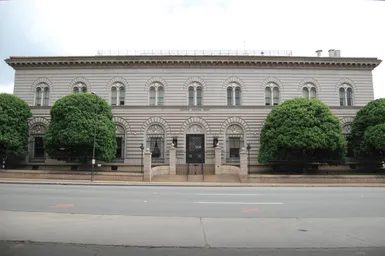
The United States Mint in Denver stands as one of four active facilities producing American currency. It isn’t just a building. It’s a high-security industrial complex where metal becomes money.
Economics defines a mint simply as a place where coins are manufactured to strict legal standards. Exact compositions. Precise weights. Specific dimensions and tolerances. The goal is uniformity. Chaos in coinage kills trade.
The Lydians in Anatolia likely built the first state mints in the 7th century BC. Greeks of the Aegean Islands copied them. The technology spread to Italy, Persia, and India. Romans followed in the 4th century BC. They laid the groundwork for modern minting.
China developed coining independently around the same time. It moved into Japan and Korea.
Medieval Europe saw a mint explosion. Commerce revived. Kings, counts, bishops, and free cities all claimed the minting privilege. France alone had over 50 mints in the 13th century.
The result was a mess.
Coinage varied wildly across regions. This variation handicapped commerce. You couldn’t trust the value of money crossing a border.
The 16th century changed things again. Spaniards established mints in South America and Mexico. They processed the gold and silver they mined.
Most modern countries now operate only one national mint. Efficiency won out over feudal tradition.
How the US Mint Structure Works
Great Britain is an exception. The Royal Mint operates two sites. The facility in Llantrisant, Wales, produces the bulk of British coinage. The London mint at Tower Hill serves largely as an administrative center. The Royal Mint is a government agency reporting to a Treasury minister.
The United States has had eight mints operate at various times. Only four remain active today. These are the engines of American circulation.
The Philadelphia Mint in Pennsylvania was founded in 1792. It still produces the majority of coins used in daily US life. It is the oldest and largest.
The Denver Mint in Colorado opened in 1906. It also produces general circulation coinage. If you hold a quarter, it likely came from here or Philadelphia.
The San Francisco Mint in California opened in 1854. It stopped making general coinage in 1955. It reopened in 1965. Its primary role now is producing proof sets for collectors.
The West Point Mint in New York focuses primarily on gold minting.
All these facilities fall under the U.S. Mint, a branch of the Department of the Treasury. They don’t work alone. Countries with insufficient demand for coins often outsource. The British mint has struck coins for other nations since the 16th century. Many mints also refine precious metals. They manufacture medals and seals.
Technology matters. The precision required to maintain the value of a currency is not trivial.
“A place where coins are made according to exact compositions, weights, dimensions, and tolerances, usually specified by law.”
The history of the Denver Mint reflects a broader shift. From feudal chaos to centralized control. From scattered local authorities to federal oversight.
Money is physical. It requires space. It requires security. It requires trust in the maker.
When you buy something today, the change in your pocket carries the weight of centuries of institutional evolution. The Denver Mint is just one node in that network.
What happens when digital currency replaces physical tokens? The mint might not disappear. But its role will shift.
We’ll see.