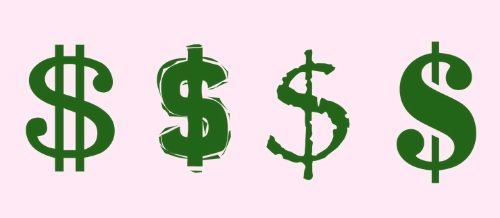
We see that vertical bar with the double S ($) everywhere. Prices. Paychecks. Invoices. It feels like it belongs exclusively to the US currency. It doesn’t.
The symbol is actually a broader monetary sign. It represents values for various types of dollars. It also stands for pesos. Many countries use this same glyph. The shape likely evolved from the Spanish peso. Specifically, the pillar-and-crown symbol on the Spanish 8-real coin. Over time, the pillars faded. The S wrapped around the pillar. The vertical line remained. The rest became a stylized S.
So when you see $, don’t assume dollars. Check the context. A price in Mexico? That’s pesos. A bank statement from Canada? Could be Canadian dollars. The symbol travels. It adapts. It’s not a flag. It’s a shorthand for value. And value takes many names.
Why the Dollar Sign Looks the Way It Does
That dollar sign—the S with a vertical line through it—is one of the most recognizable symbols in global finance. But it doesn’t just represent the US dollar. It’s the default shorthand for a whole family of currencies: the Canadian dollar, the Australian dollar, the Bahamian dollar, and others from former British colonies. When people type “$50,” they usually mean US dollars. But they’re using a symbol that has deeper, older roots.
How to Tell Which Currency Is Which
The symbol alone is ambiguous. Is it US dollars? Mexican pesos? Colombian pesos? That’s where ISO codes come in. They cut through the confusion.
- USD for the US dollar
- CAD for the Canadian dollar
- MXN for the Mexican peso
- COP for the Colombian peso
- CLP for the Chilean peso
You’ll often see these codes paired with the symbol. US$1 means American dollars. C$1 means Canadian. MXN$1 is Mexican pesos. Sometimes you’ll spot an asterisk at the end of a number, like 100, indicating local currency. It’s a small detail, but it matters when you’re tracking cross-border transactions or comparing international prices.
Where the Symbol Came From
The icon didn’t appear out of nowhere. It traces back to the colonial era. The most widely accepted theory links it to the Spanish peso. Spain minted these coins in the Americas starting in 1536. The abbreviation used was Ps. Over time, the P and S merged. The vertical line through the S? That might be a remnant of the P.
There’s another layer. Early dollar signs sometimes featured two vertical lines. Some historians suggest this was tied to the Spanish Empire’s motto, Plus Ultra (“Further Beyond”). The S represented the motto, wrapped around the Pillars of Hercules at the Strait of Gibraltar. Two pillars. Two lines. One S.
Why One Line Won
The double-line version didn’t stick around long. Why? Technology. As typewriters and later computer systems standardized keys, the single-line dollar sign became the norm. It was easier to type. Easier to display. The double-bar version got dropped from most keyboards. The single line survived because it was practical, not because it was theoretically superior.
The Word “Dollar” Itself
The word comes from the German thaler, a silver coin used in Central Europe. English colonists in America started calling the Spanish peso the “Spanish dollar.” It was a translation, not a direct equivalent. When the US declared independence in 1776, it needed its own currency. In 1793, they officially adopted the dollar sign—derived from the peso’s symbol—to represent their new dollar.
What It Means for Your Wallet
Knowing the difference between USD$ and MXN$ isn’t just academic. It’s practical. If you’re booking a hotel in Cancun, seeing “$100” could mean 100 US dollars or 100 Mexican pesos. The gap is massive. One buys you a nice suite. The other buys you a bottle of water. Always check the code. Or the asterisk. Or the context.
Symbols are shorthand. They’re efficient. But efficiency can mask risk. Never assume. Verify. The history of the dollar sign is messy, colonial, and technological. The present is simpler, but no less important to get right.