
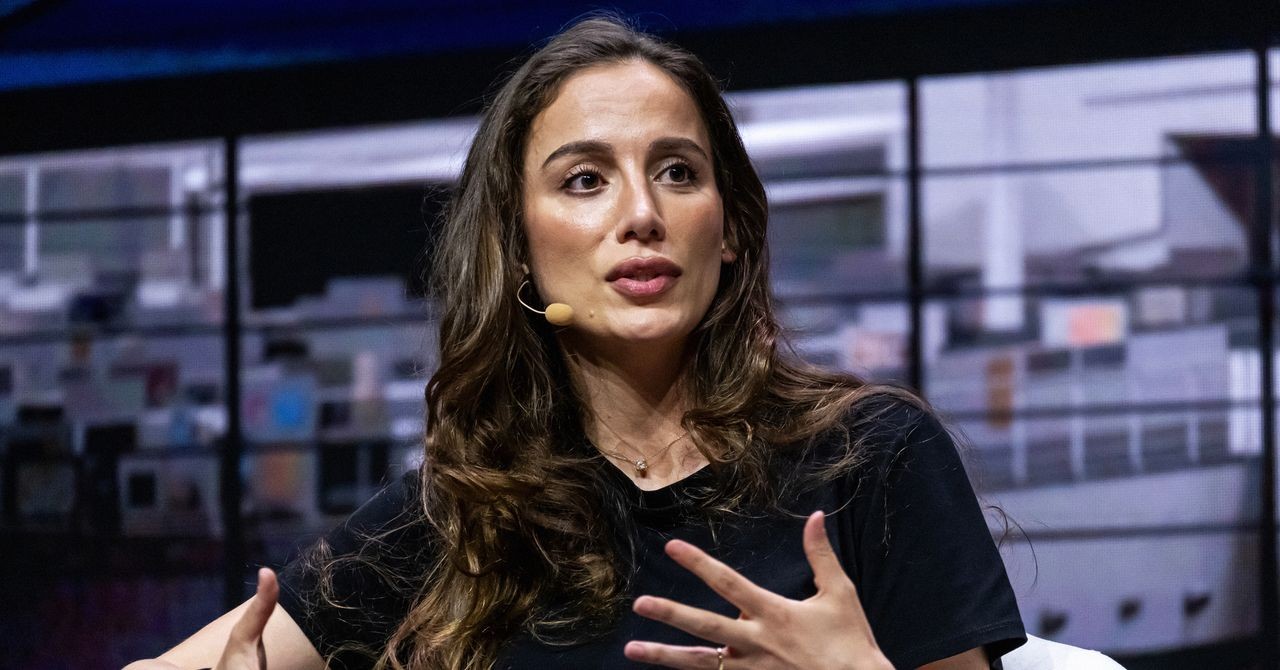
Mira Murati isn’t giving up on superintelligence. She wants to build it.
But as the former CTO of OpenAI she sees the equation differently. Human intelligence needs to stay in the mix. It’s critical. Or at least that’s her bet.
Thinking Machines Lab her startup is pushing back against the grim narrative. The one where AI steals jobs. Where power consolidates into a handful of tech giants. Instead they propose something radical. Keep us involved. Keep us relevant.
“At some point we will have super-inelligent machines” she tells WIRED. “But… we think that the best way… is to keep humans in the loop.”
As long as possible.
The logic? Don’t automate humans out of existence. Customize frontier AI models to your own preferences. Then work with them.
It’s messy on purpose
This week the lab previewed its “interaction models.” They’re designed for reality not sterile prompts.
They talk through camera and mic. Unlike voice modes that just transcribe chat inputs these models natively parse human noise. The pauses. The interruptions. The shift in tone when you’re confused or bored. They adapt on the fly.
The company showed off demos. Videos of fluid messy conversation. No public release yet just a glimpse of the future they want to build.
It’s a sharp departure from the big players.
OpenAI. Anthropic. Google. They’re all building models that do the work for you. Write entire software stacks from a single prompt. No human help needed. Just results.
Thinking Machines thinks that’s lonely. Maybe dangerous.
Not alone in this
Murati didn’t come from nowhere. She left OpenAI’s CTO role in 2024. Cofounded this thing with engineers she trusted. They’ve raised billions.
But output? Slow.
Tinker launched last October in 2025. An API for fine-tuning open-source models. That’s it so far. Just one product for a company worth billions.
Alexander Kirillov another founding engineer argues the interaction models change everything. He points to multimodal capabilities—audio video text all at once. The model sees what you do. Replies instantly. Uses tools while you talk.
“None of today’s models can do this” he says. Other systems rely on dumb turns in conversation. Less intelligent. More rigid.
Murati frames this as the first real bet on collaboration. Amplifying your values. Your intent. Not replacing you.
Some economists agree. Labs like Humans& share this vision. Human empowerment not replacement.
The tech is unpolished. The timeline is slow.
But maybe being slightly slower allows for something more human.