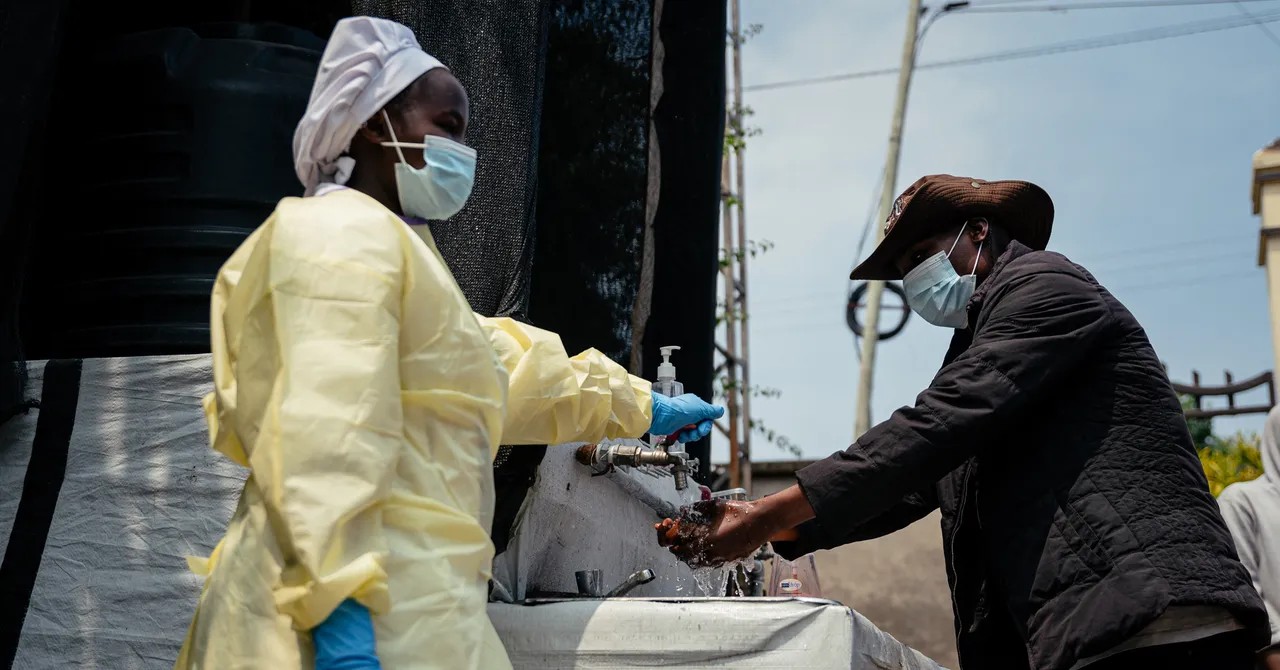
Supplies are missing. Masks. Hand sanitizer. Testing kits.
Amadou Bocoum knows the frustration well. As the country director for CARE in the Democratic Republic of the Congo (DRC), he watches the response stall in real-time. “We are no longer able to get some resources,” he told WIRED. Immediate reaction is impossible now. Why? The funding dried up.
The Trump administration decided to shrink foreign aid. Specifically, they moved to shut down the United States Agency for International Development. It was a move that fragmented the disease prevention system right when it was needed most.
Experts call it a “perfect storm.”
A CDC employee who has handled outbreaks before put it plainly. “We are so far behind,” they said.
The Bundibugyo Threat
The WHO declared the outbreak an emergency of international concern on May 16. This is not the Ebola strain you saw in 2014. It’s Bundibugyo. No vaccine exists. No specific treatment works.
The numbers are ugly.
Over 530 confirmed cases by May 19. 134 dead. And both figures are climbing. The CDC notes that mortality for this specific strain sits between 25 and 50 percent. It’s a coin flip, but weighted toward death.
“If this is not handled carefully it will get wild very easily.” — Amadou Bocoum
Time is the enemy here. Containment requires speed. Speed requires money. Money isn’t there.
Who Did This?
Look at the timeline. February 2025.
Elon Musk’s Department of Government Efficiency, DOGE, started dismantling USAID. Musk admitted later that his team had “accidentally” cut Ebola prevention funding, then supposedly fixed it.
They didn’t fix it.
WIRED reported at the time that lifesaving prevention work remained unfunded. DOGE also gutted the CDC. By April 2025 a US National Institute of Health facility stopped researching Ebola entirely. The Trump administration told them to stop. Just stop.
Before the cuts USAID was the backbone of health security in the DRC. The US embassy in Kinshasa noted in 2024 alone that the agency treated 11 million people with TB and HIV. They also helped contain six previous Ebola outbreaks. They knew what to do. Now? They are gone.
“We used to coordinate really closely,” the CDC source said. The CDC would deploy people. USAID would send gear. It worked. It was rapid. Now that pool is gone. The source noted the US withdrew from the WHO in January 2027. Two major pillars of support cut off simultaneously.
Is this the level of planning we expect from a superpower?
The Human Cost
Burnout is the new reality.
CDC teams are on the ground but their capacity has shrunk. Leadership is gone. The staff who remain are exhausted. One employee noted they can’t expect workers to pull 16-hour days for two straight months without backfill. That pool of reinforcements used to exist. Now it is tiny. Smaller than it was a year ago.
Other teams won’t jump in. They are already understaffed for their normal jobs. It’s unsafe to send them.
Joia Mukherjee, an infectious disease professor at Harvard, says the outbreak “unequivocally” could have been caught earlier. Earlier means smaller. Earlier means contained. The slash to US aid prevented that window of opportunity.
Anna Tate leads domestic programs at Project HOPE. She used to manage biosecurity strategy for the government. Her assessment is blunt. Funding disruptions wreck surveillance systems. Labs stop working. Vaccination efforts halt. Early identification becomes impossible.
“Outbreak response capacity cannot be left to the mercy of budget cuts,” she suggests. You have to build it when you are calm not in crisis.
Crossed Borders
The virus is moving.
The first cases appeared in the Ituri region. It borders South Sudan and Uganda. Refugees cross these lines constantly. Confirmed cases already showed up in Kampala the capital of Uganda.
Uganda postponed an annual religious celebration due to the fears. Thousands of pilgrims usually travel from the Congo. But will rural communities hear the news in time? Travel doesn’t pause for announcements.
Travel bans are up. CDC monitoring is intensive. Still the former deputy administrator for global health at USAID remains worried. The spread to the US is possible if control isn’t established immediately.
We waited. The system atrophied. Now the cases are here.
“Outbreak response capacity needs to be built not just bought at the last second.” — Anna Tate
The question remains whether anyone wants to fix what they broke before it arrives on our own soil. Or if we will just keep reacting to the next storm hoping we have enough masks left in the cupboard. 📉
Got a Tip? If you work in public health and have inside info on these failures do not use your work phone. Reach out securely on Signal. Contact leahfeiger.86 or Kateknibbs.08. We are listening.