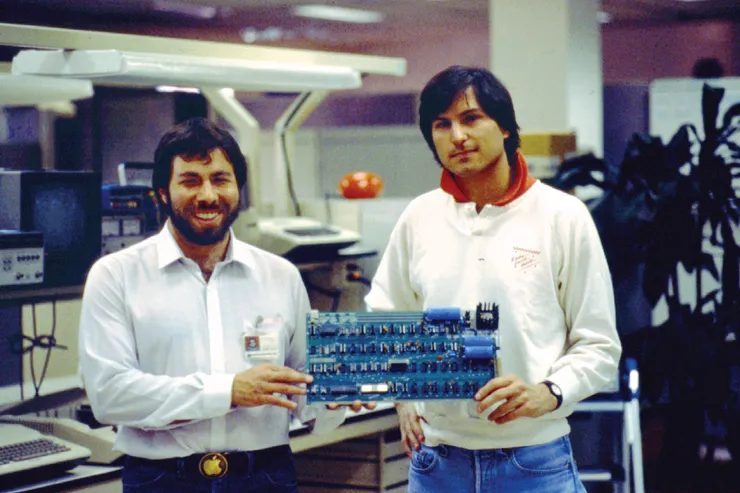
Apple didn’t start as a tech giant. It started as a garage project. In 1976, Steve Jobs and Steve Wozniak launched what would become the first successful personal-computer company. They were originally called Apple Computer, Inc. The first machine they built rolled off a workbench in the Jobs family garage. It wasn’t a sleek device. It was a prototype. But it changed everything.
The real breakthrough came in 1977. Apple released the Apple II. It had a plastic case. It featured color graphics. These were small details, but they mattered. Consumers saw a computer they could actually use at home. The response was immediate. By 1980, Apple had earned over $100 million. That same year, they went public. The IPO marked the moment a garage hobbyist became a public corporation.
Then came 1984. Apple introduced the Macintosh. It was the first personal computer to use a graphical user interface. It also used a mouse. This was radical. Before this, you typed commands into a black screen. The Mac let you click icons. It felt intuitive. Sales were weak at first. The price was high. The software was limited. Steve Jobs left the company in 1985, frustrated by the internal politics and the slow rollout.
But the Mac didn’t die. It found its niche. Desktop publishing. Designers and publishers needed layout tools. The Mac provided them. It became the standard for graphic design and publishing for years. The machine survived because it served a specific, high-value market.
In 1997, Apple recalled Jobs. The company was near bankruptcy. They needed a visionary. They got one. Jobs returned and cut产品线. He focused on innovation. The iMac launched soon after. It was colorful. It was all-in-one. It made computing fun again. The company returned to profitability within months.
The early 2000s brought a new strategy. Music. In 2001, Apple released the iPod. It was a portable MP3 player. It was small. It had a click wheel. It synced with iTunes, software that played converted MP3 files. The ecosystem was tight. You bought music on iTunes. You played it on your iPod. It just worked. By 2003, Apple began selling downloadable songs from major record labels in MP3 format over the internet. This killed the physical CD as the primary music format.
The next shift was bigger. 2007. Apple introduced the iPhone. It was a touch-screen smartphone. Before the iPhone, phones had keyboards. They had small screens. They were clunky. The iPhone had a large glass front. It had apps. It had a browser that actually worked. It redefined what a phone could be.
Two years later, in 2010, Apple launched the iPad. It created a new market. Tablet computers. Before this, tablets were niche devices for enterprise or stylus-based input. The iPad made a large-screen, touch-first device mainstream. It sat between a phone and a laptop. It filled a gap nobody had clearly defined until Apple did.
Today, Apple is worth trillions. But the roots are in that garage. The lessons are simple. Build something people want