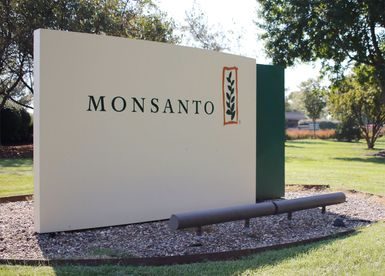
Monsanto is gone as a standalone entity, but its footprint on global agriculture and law remains massive. The company that became a titan of agricultural chemicals and genetically modified seeds didn’t just vanish. It was absorbed. Bayer acquired it in 2018 for over $60 billion. After that deal closed, the Monsanto name effectively ceased to exist as a separate brand. It was folded into Bayer’s crop science division. But to understand what happened to the company, you have to look at where it started. And it wasn’t in seeds. It was in sweeteners.
The Saccharin Start (1901–1945)
John F. Queeny didn’t have a fortune. He was a purchasing agent for a wholesale drug company. In 1901, he scraped together $1,500 of his own cash. He also borrowed $3,500 from a local Epsom salts manufacturer. With that modest capital, he launched the Monsanto Chemical Works. He named the business after his wife’s maiden name. The goal was specific: manufacture saccharin. At the time, Germany held a near-monopoly on synthetic sweeteners. Queeny wanted to break that grip.
By 1902, they were producing saccharin at scale. The product line grew quickly. Caffeine joined the mix. So did vanillin. The business began turning a profit by 1905. Sales hit $1 million in 1915, largely driven by one major client: The Coca-Cola Company. In 1917, Monsanto started making aspirin.
The company expanded during World War I. It thrived under the high U.S. tariffs of the 1920s. Queeny handed control to his son, Edgar M. Queeny, in 1928. The company incorporated as Monsanto Chemical Company in 1933. Its role in World War II was critical. Monsanto produced styrene. That chemical is a key component of synthetic rubber. Without it, the U.S. war effort would have struggled.
Industrial Expansion (1946–2000)
Edgar Queeny transformed the firm into an industrial giant before retiring in 1960. The business had diversified too much to keep the “Chemical” tag. In 1964, they dropped it. The company was now simply the Monsanto Company.
A massive shift occurred in 1985. Monsanto bought G.D. Searle & Co. That pharmaceutical firm made NutraSweet. It seemed like a natural fit for a chemical conglomerate. But it wasn’t. The food ingredient business eventually became a drag. In 2000, Monsanto sold its sweetener businesses, including NutraSweet. They exited the food ingredients market entirely.
The pivot was toward biotechnology. In the 1990s, Monsanto bought Calgene Inc. and DEKALB Genetics. These acquisitions cemented their lead in genetically modified crop seeds. They also entered the livestock market. In 1994, they began commercial production of bovine somatotropin (BST). It’s a growth hormone that boosts milk production in dairy cows.
The Biotech Focus and Backlash (2000–2016)
Monsanto merged with Pharmacia & Upjohn in March 2000. But that merger didn’t last long. In August 2002, Pharmacia spun off Monsanto’s non-pharmaceutical segments. Monsanto became a publicly traded company again. Its focus was sharp: agriculture and biotechnology. They acquired seed companies and software makers to deepen their moat.
Public opinion turned against them. Critics opposed their push for genetically modified organisms (GMOs). There were also growing concerns about their chemical products. By the 2010s, the lawsuits started flowing. Plaintiffs claimed that Roundup, the company’s flagship weed killer, contained glyphosate. They argued glyphosate caused cancer. The legal pressure mounted.
The Bayer Deal and Legal Quagmire (2016–Present)
Bayer, a German chemical and pharmaceutical giant, saw an opportunity in 2016. They agreed to buy Monsanto for more than $60 billion. The deal closed in 2018. The timing was terrible. Shortly after the acquisition finalized, a jury found Monsanto liable in a Roundup lawsuit. The prospect of massive legal liabilities hit Bayer’s market value hard.
The litigation didn’t stop. It accelerated. By the 2020s, Bayer was facing tens of thousands of lawsuits. Claimants alleged that exposure to glyphosate caused non-Hodgkin lymphoma. In 2020, Bayer agreed to pay more than $10 billion to settle thousands of these claims. It was a costly attempt to put a lid on the bleeding.
But one case kept going. In 2025, a U.S. jury awarded $2.1 billion in damages in a single case. That verdict highlighted how fragile the settlement was. Bayer had a different strategy for the remaining cases. They argued that federal pesticide law preempts state lawsuits. Their point was simple: the U.S. Environmental Protection Agency (EPA) does not require cancer warnings on pesticide labels. Therefore, state-level claims about lack of warning were invalid.
The Supreme Court agreed. In 2026, they ruled 7–2 in Bayer’s favor. The decision was expected to block thousands of pending cases. It didn’t close the book entirely. Product-design lawsuits remained on the table. The company won the war on labeling, but the front lines of liability had just shifted.