Clarissa Mansbridge liked the shadows. For nearly twenty years, she operated in the background of the entertainment industry in Brisbane, Australia. She managed stars like Jason Derulo and Shengo Deane. She handled crises. She built brands. Then her son was born at thirty-three weeks without a heartbeat.
Doctors fixed him. But the months in intensive care changed everything.
Mansbridge had to change her work to cope with the complications of his recovery. She turned to AI image-generation tools. She built a virtual persona named Mia Metaverse. The character was defined as “humbly wealthy” and “wholesome.” Fans of early The Sims will recognize the appeal. It is about crafting storylines. It is about designing glamorous settings for a digital avatar to inhabit.
Now, thirty-four-year-old Mansbridge earns around $6,000 monthly. She does this through brand collaborations. She also designs bespoke AI influencers for other companies. Many clients sign Non-Disclosure Agreements. She cannot reveal who they are. This has been her most profitable year since starting. Yet she is nervous. Global shifts in how platforms handle AI content could collapse her business model overnight.
The EU AI Act: A Blunt Instrument
The market for virtual influencers is exploding. Estimates place the current value at $14.5 billion. It is projected to hit $110.4 billion by the year 2033. That represents a 33.6% annual growth rate. Brands agree. A survey by agency Billion Dollar Boy found 79% of marketers are increasing spending on AI-generated creator content.
But the regulatory tide is turning.
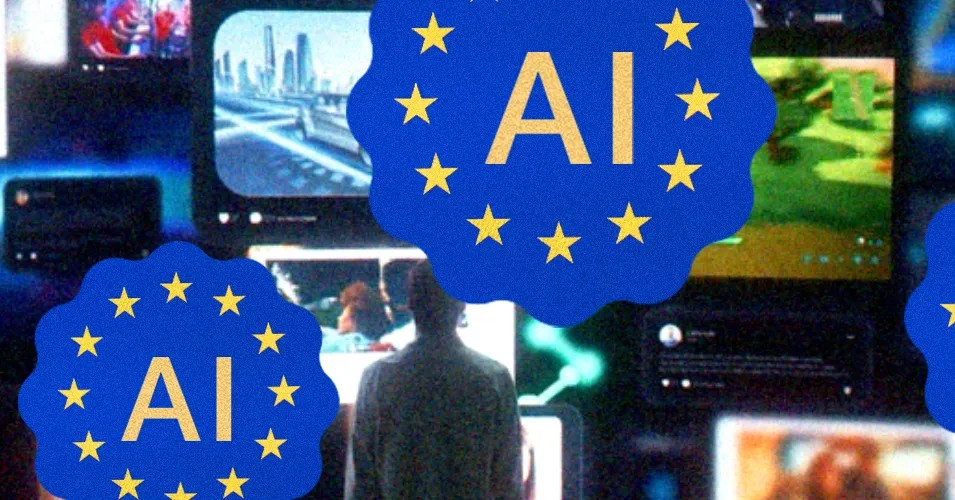
Starting August 2, new rules under the EU AI Act take effect. They require AI-generated or manipulated promotional content to be clearly labeled. TikTok is also tightening detection systems. The platform is reshaping feeds to favor human creators over synthetic spam.
For livelihoods built on artificial influence, the result is a regulatory maze with no map.
The EU AI Act is the first comprehensive legal framework of its kind. Ursula von der Leyen calls it a “global first.” Its goal is “trustworthy AI” in Europe. Article 50 mandates disclosure for audio, image, video, and text content generated by AI. But there is an escape hatch. If the content is artistic, creative, satirical, or fictional, the transparency obligations are limited. The label must not hamper the enjoyment of the work.
This ambiguity leaves room for interpretation. And confusion.
“The driver was simply: AI is here and more AI-generated content are coming, so let’s raise the [AI literacy] of EU citizens,” says Kai Zenner, digital policy adviser. “ChatGPT had only just come out… there was scant knowledge among MEPs… about what we were regulating for.”
Copyright Traps and Algorithmic Sledgehammers
More legislation is coming later this year or next. Zenner warns it will force influencers to provide transparency on their origins and financing. We do not yet know how this will be managed beyond Article 50.
The risk is a tangle of laws. The AI Act clashes with copyright rules. Audiovisual media standards apply. Consumer protection laws intervene. The proposed Digital Fairness Act targets online tactics that mislead users. Creators could find one law saying their content is legal, while another bans it.
Platforms are already cracking down. In mid-July, TikTok launched a detection system for AI spam. The company claims this spam is crowding out original creators. The system identifies synthetic content immediately. It lets users filter out AI material. Pinterest and Meta (Facebook, Instagram, Threads) follow similar protocols, adding “AI info” labels upon detection.
“The same platforms that produced more content… are now tweaking their algorithms to push [AI content] back down,” explains social media consultant Matt Navarra. “Platforms are swinging at AI content with a sledgehammer when what they need is a scalpel.”
The problem with sledgehammers? Collateral damage. Human creators get caught in the net. They used AI for grammar fixes or minor edits. They are punished anyway.
The Cost of Visibility
Lionel Metge knows this cost. Based in Lyon, the hip-hop producer created Zairo, an AI reggaeton artist, earlier this year. He sees the shift firsthand. New detection systems flag AI-generated posts the moment they go live. Especially if the account claims to be a digital creation.
Metge’s Zairo has 23.8k followers. He worries the rules are alienating that audience. Yet he accepts the necessity. Realistic generation models demand realism in disclosure. He plans to double down on quality and coherence. That is the only way to stand out now.
Rob Haywood, head of safety at Fanvue, sees a different path. The platform has worked with creators on disclosure standards. Some are leaning into transparency. They build unique content only possible for an AI persona. They stop trying to hide. Haywood notes TikTok is responding to a tide of low-effort synthetic flooding. Platforms must protect human visibility.
Selling Predictability
Mansbridge is building a portfolio, not just one character. She hopes to cross-promote personas. Eventually, she wants them to run autonomously. Her motivation is personal. She wants to create a legacy for her son. If he needs financial support in the future, it must be covered.
Her strategy is safety in transparency. She made Mia Metaverse relatable but aspirational. A clean slate. No scandals. No politics. No moral clauses to break. In a market demanding disclosure, predictability is an asset. Fully controlled AI personas may become more valuable because they do not embarrass brands.
Not everyone sees regulation as a threat.
Wim Tilkin is a 60-year-old Belgian animator. He created PuppyBerry Mousy, an AI mouse in a scarf. He started by hand-drawing a five-second clip. He fed it into AI. He added music. It got three million views.
Mousy now has 236k followers on Instagram and 68.3k on Facebook. Growth spiked in the last five months. The audience is mostly women over 50 in the US and UK. Tilkin receives messages from lonely or sick people. They find comfort in Mousy’s dancing.
“Mousy is all about softness and cozy in a hectic world,” Tilkin says. “I’m glad that combination is bringing joy.”
He has seen the shift from 2D to 3D before. He sees this as just another tool. More possibilities for creative voice. More choices to make. The real question for him is whether regulation will protect storytelling or flatten it. If it flattens it, Mousy might disappear into the noise. Or perhaps, she will become the only voice left that sounds like a human heart.