
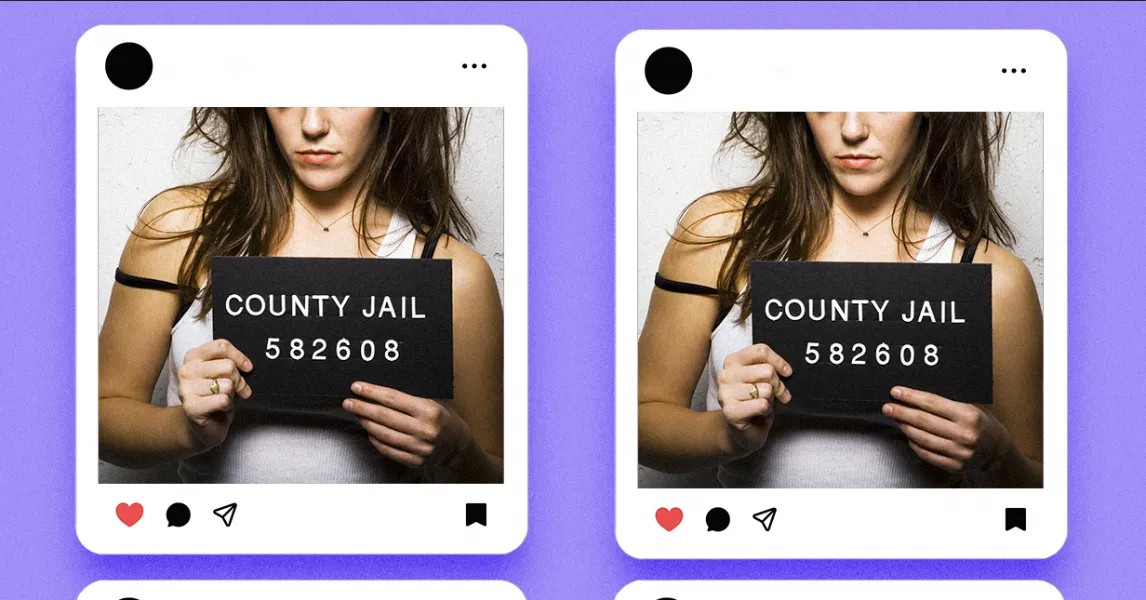
The night Megan Davis got arrested, it started like any other bad Tuesday in Texas. She was 23. She had been out for drinks with friends in College Station. Things got loud. An altercation broke out with another group of patrons. Security kicked her out. The police arrived.
They charged her with public intoxication. She spent the night in jail. It cost her $450 and her dignity.
“I knew I made a big mistake,” Davis says. She had a panic attack right before the photo was taken. She paid the fine. She moved on. Or so she thought.
Then came the viral explosion.
On August 21, 2015—dates in the source are contradictory, but the timeline holds a week later—the photo of Davis’s mugshot didn’t stay in a police file. It landed on SayCheese Brazos County Mugshots. It became a hoax about an Olive Garden waitress. Then it hit Mugshawtys, a massive Instagram account known for turning arrest photos into thirst traps.
Now, thousands of strangers judge her. They critique her face. Her character. Her mother, who had just died of an overdose, was dragged through the comments too. A stranger wrote that Davis’s parents must be proud. Davis replied that her mother had passed away weeks prior.
“Hope she’s proud of what I’ve done,” Davis wrote.
It’s been nearly a year. The fallout hasn’t stopped.
Who Runs Mugshawtys?
Josh Jeffery started Mugshawtys about ten years ago. He’s 31. He lives in California. He’s an electrician.
The account grew into a beast. At its peak, it had 1.8 million Instagram followers. Another million came after an appearance on Joe Rogan’s podcast. It has 19,000 followers on Facebook and nearly half a million on X (formerly Twitter).
For a decade, Jeffery posted mugshots of young women. He claimed these women were friends. He said he encouraged followers to chip in for bail or legal fees. He denied exploitation.
“I’ll take down anything,” Jeffery told WIRED. “Especially if they didn’t submit it themselves.”
Then, last week, it all vanished.
Meta disabled Mugshawtys on Instagram and Facebook. TikTok did the same. A Meta spokesperson cited multiple policy breaches. TikTok declined to comment. X ignored requests for comment. Jeffery didn’t respond either.
Did he lose his empire? Or just a platform?
The Cost of a Photo
The images aren’t just pictures. They’re tools.
Danielle Dirks, a sociologist, sees what these accounts do. Women are captured at their worst. Disheveled. Crying. Intoxicated. Held by the state. No makeup. No armor.
“Some men think this is the perfect time,” Dirks says. “To seize upon them.”
The comments section is where the damage lives.
One user commented under an underage drinking post: “They don’t have to be old of to drink, just old of to swallow.”
Another ranked a woman’s attractiveness at “mid.” “That’s a man. 6 at best.”
When Mugshawtys posted a photo of a woman in an anti-suicide smock, the caption falsely accused her of child endangerment. The image showed a gloved jail official holding her head while she grimaced. A commenter joked: “Child abuse I hope the guards pushed her head to other place.”
Jeffery sells T-shirts and hats that say “I [heart] hot felons.” He even released a coffee table book in 2014 through a Dutch publisher.
It’s not just online abuse. It’s monetized humiliation.
The Law is Broken
Sarah Lageson, a law professor at Northeastern University, says mugshots were originally law enforcement tools. Communities needed to know who the offenders were. Journalists flipped through physical booklets. You had to know people to get them.
The internet changed everything.
Online mugshot sites popped up in the mid-2000s. They charged money to remove photos. Pay-for-removal became a industry. Now, bodycam footage is everywhere. YouTubers use Freedom of Information Act requests to grab videos.
Mugshot laws are a mess.
Oregon doesn’t let police release mugshots before a conviction. Florida doesn’t care. But even in loose states, mugshot sites must remove photos upon request. Usually for free.
Most people don’t have the energy to fight.
“People are so exhausted by the mugshots itself,” Lageson says. “They often don’t want to litigate. They don’t want to put their name back in the public record.”
It Follows You
Taylor Johnson got a DUI in 2012. She spent 20 days in jail. She avoided probation.
Two years later, her phone buzzed. Friends sent links. Mugshawtys had posted her photo.
“At first, I was embarrassed,” Johnson says. “I felt like I’d put it behind me.”
She asked Jeffery who posted it. He didn’t know. He gets too many DMs.
She initially asked for removal. Then she realized the photo was public record. So she let it stay.
Big mistake.
Her mugshot got used for clickbait. TikToks titled “How I Stayed Pretty—Even After 3 Years in Prison” used her face. The Mirror ran an article calling her “Insanely Beautiful.” She hated it.
“My dad had just passed away a few months before,” Johnson says. “It felt like I couldn’t catch a break.”
Now, people at her job know her. As the “Mugshawtys Girl.”
She laughs about it now. If she doesn’t, she cries.
Why It Stopped
Holly Singleton, 22, in Indiana, didn’t mind her mugshot. It went up in March. “Gave me a little ego boost,” she says. She’s not bothered. “Social media is forever.”
Most women on Mugshawtys were white. College-aged.
A 2015 study by Dirks noted that white women are often seen as “victims of circumstance” rather than criminals. But on Mugshawtys? The beauty standards make them more visible. And therefore, more vulnerable.
More punishment.
The jokes continue after the fines are paid. After the prison time. After the charges are dropped.
Jeffery says the justice system is the real exploiter. He says he’s a hero for posting them.
Maybe he was.
But the platforms didn’t agree. The bans came quickly.
So what’s next?
For Davis, Johnson, and thousands like them, the question remains: where do we draw the line?
Privacy? Or profit?
The answer isn’t in the law books. It’s in the comments. And we’re still reading them.